'A pretty significant setback': How Blue Origin's rocket explosion affects NASA's moon plans
Space.com ·
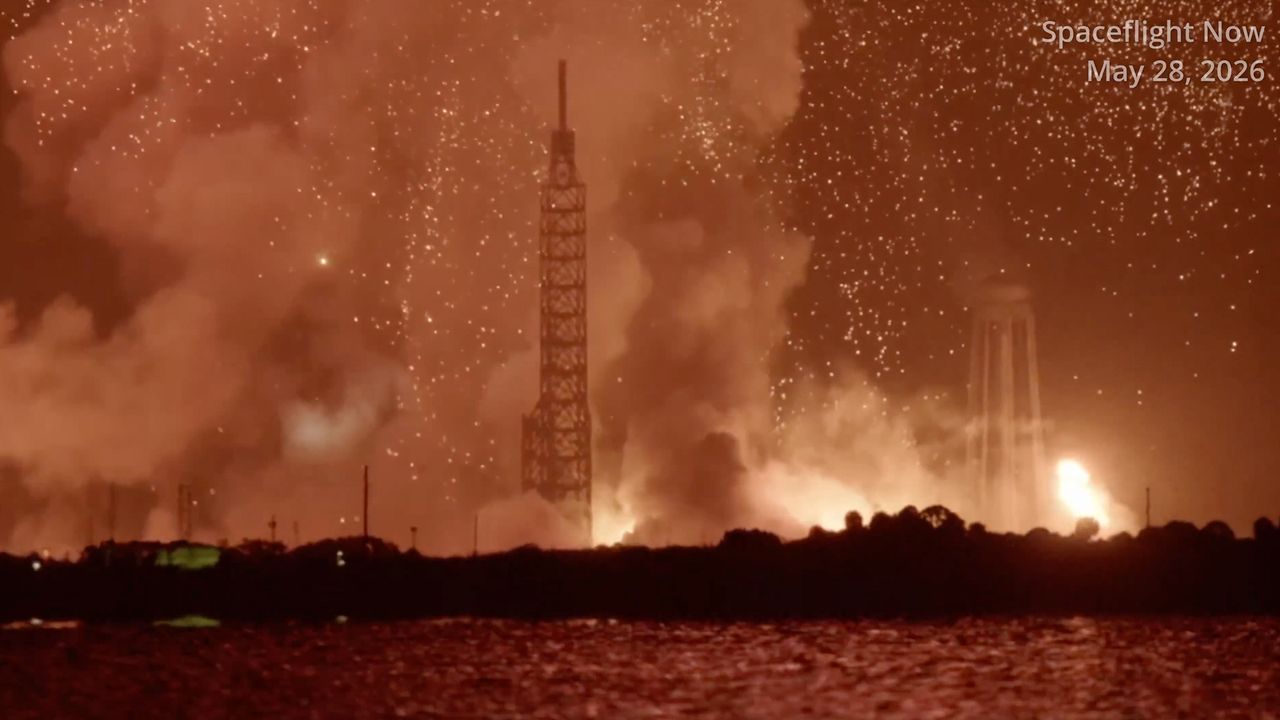
The recent explosion of Blue Origin's New Glenn rocket during a routine test is a big setback for the private spaceflight company, and will likely have implications for NASA's Artemis program …
The recent explosion of Blue Origin's New Glenn rocket during a routine test is a big setback for the private spaceflight company, and will likely have implications for NASA's Artemis program timeline and the nation's efforts to return astronauts to the surface of the moon. The May 28 incident , in which no one was injured, occurred while Blue Origin prepared its fourth New Glenn rocket for launch. A static test fire of the vehicle's engines at Launch Complex-36 (LC-36), located at Cape Canaveral Space Force Station (CCSFS) in Florida, was the rocket's last major milestone before a liftoff targeted for June 4. During that test, however, an explosion destroyed the rocket and severely damaged launch infrastructure on the ground. (The payload for that flight, a group of 48 Amazon Leo internet satellites , was not aboard the rocket when it exploded.) The mishap is a major blow to Blue Origin's progress with New Glenn, which was only cleared to proceed with the upcoming flight a week ago. New Glenn had been grounded pending a Federal Aviation Administration (FAA) investigation after the NG-3 mission in April, when a failure of the rocket's second stage stranded AST SpaceMobile’s BlueBird 7 satellite payload in an unstable orbit. Now, with another investigation opening, and extensive repairs needed at LC-36, New Glenn may be grounded for a while, potentially forcing NASA to change its expectations for how Blue Origin will support upcoming Artemis missions. …
Original source: Space.com
Mentioned
Blue Moon · Atlantic Ocean · Georgetown University · Federal Aviation Administration · Cape Canaveral Space Force Station