Striped rock dismissed as natural in 1928 reclassified as UK’s oldest cave art
The Guardian World ·
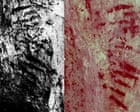
In 1912, the Guardian reported on the discovery of Palaeolithic rock art on the walls of Bacon Hole, a cave near the Mumbles in south Wales – only for the painted panel’s authenticity to be dismissed …
In 1912, the Guardian reported on the discovery of Palaeolithic rock art on the walls of Bacon Hole, a cave near the Mumbles in south Wales – only for the painted panel’s authenticity to be dismissed by 1928. A series of horizontal bands in red pigment were subsequently deemed no more than a natural phenomenon and the newspaper added an updated statement : “It was later established that the red streaks … turned out to be red oxide mineral seeping through the rock and not prehistoric art.” But the original report has now been proved correct by new analysis. Archaeologists have used the latest scientific means to date the rock art, discovering that it was in fact created 17,100 years ago – making it the oldest example in Britain as well as north-western Europe. Dr George Nash, a British specialist in prehistoric art who headed an international team that conducted the new research, said: “This is the earliest prehistoric art we have in Britain. “It was never considered to be rock art after 1928, and also it could never be dated, because in those days they didn’t have the scientific means that we have today. “We’ve used uranium-thorium dating for the pigments. We’ve got data 17,100 years before present, which makes it the oldest rock art in the British Isles. I was taken aback that we were able to date it and analyse the pigments. This is an exciting rediscovery, significant in understanding what was going on in Wales in the deep past.” William Sollas. …
Original source: The Guardian World