Britain’s pothole problem is no quick fix | Letters
The Guardian Business ·
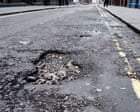
Esther Addley ( The pothole puzzle: the bumpy ride to fixing Britain’s broken roads, 23 May ) quotes Phill Wheat, a professor of transport econometrics at the University of Leeds, describing the …
Esther Addley ( The pothole puzzle: the bumpy ride to fixing Britain’s broken roads, 23 May ) quotes Phill Wheat, a professor of transport econometrics at the University of Leeds, describing the “spiral that we could get into” if funding for road maintenance is not increased. In truth, many highway authorities are already well down that spiral. Once holes and cracks start appearing in a road, they grow and proliferate quickly. Vehicle wheels act like jackhammers around every bump and dip. Once the surface starts breaking up and water loosens the lower layers of the road structure, the opportunity to dress or replace the surface soon passes, and rebuilding at much greater expense becomes unavoidable. So repair costs rise rapidly in the short term and multiply in the long term. Highway authorities need to prioritise and schedule all roads for resurfacing or rebuilding. That will significantly increase the funding requirement in coming years, but once the programme is well advanced, reactive repair costs will decline sharply. Highway authorities need to model cost projections to show central government that more funding now will save money in the longer term. There must be no cutting corners when rebuilding roads: if they continue to deform under the weight of ever-heavier vehicles, we’ll end up in a spiral again. …
Original source: The Guardian Business