A 'lost planet' may have given Jupiter and Uranus their moons
Space.com ·
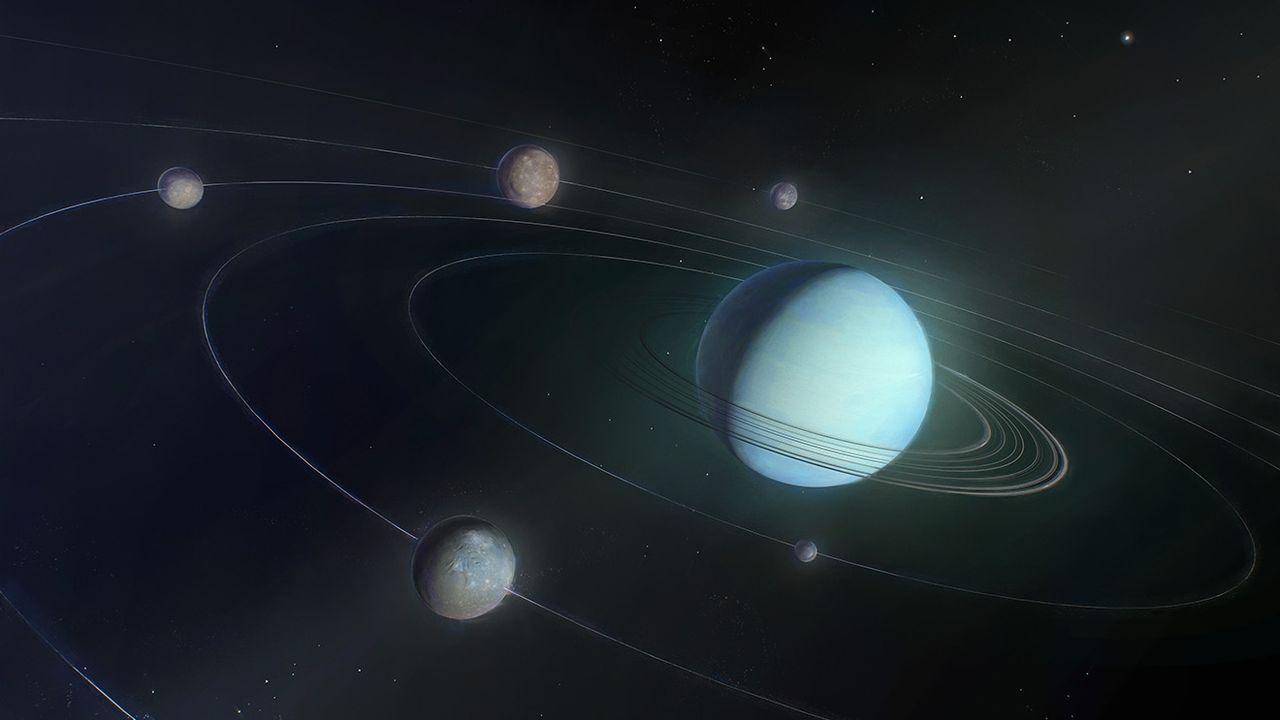
For years, astronomers have suspected that our solar system may have lost at least one world at some point in its 4.5-billion-year history. …
For years, astronomers have suspected that our solar system may have lost at least one world at some point in its 4.5-billion-year history. And now, new research suggests the moons of Jupiter and Uranus may indeed hint that our planetary neighborhood once had a third ice giant. Evidence has shown that between 3 billion and 4 billion years ago, the solar system 's largest planets likely orbited much closer to the sun (and to each other) than they do today. It's also suggested that our four giant planets — Jupiter , Uranus , Saturn and Neptune — gradually shifted into their current orbits due to a series of interactions with one another's gravity . With this in mind, researchers ran some simulations to explore how all that jostling for position might have affected the moons of Jupiter and Uranus in particular — and the results suggest that these two planets' moons only survived that tumultuous time because of a giant planet that didn't. Potential histories of the solar system Clement and his colleagues ran computer simulations of 122 possible versions of the early outer solar system, using different starting combinations of planets and different scenarios for the worlds' migration patterns. They ran each simulated version of the solar system's history several times, taking note of which versions were more likely to produce something that looks like the outer solar system as we know it today. …
Original source: Space.com