Daily briefing: The known protein universe just got a lot bigger
Nature News ·
You have full access to this article via your institution. Hello Nature readers, would you like to get this Briefing in your inbox free every day? Sign up here . …
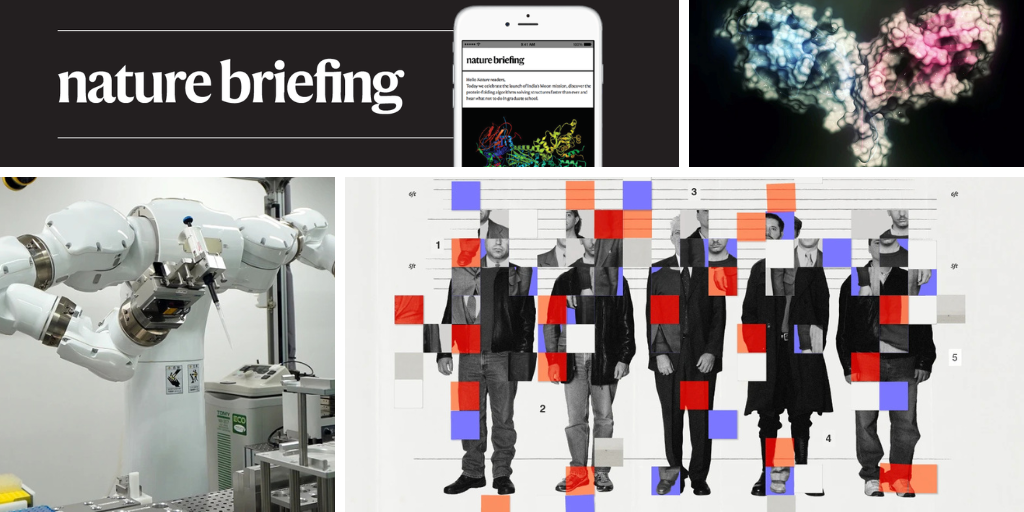
You have full access to this article via your institution. Hello Nature readers, would you like to get this Briefing in your inbox free every day? Sign up here . Laboratory robots with built-in artificial-intelligence software can look after stem-cell cultures independently. Credit: Masatoshi Okauchi/Shutterstock In a biology laboratory in Tokyo, ten two-armed robots run the show . The robots can handle liquids, grow cells on plates and operate scientific instruments, among other basic tasks. The lab does still require some human input to function, but largely frees researchers up to focus on designing experiments and interpreting results. The ultimate goal is to create a “factory-scale” facility with thousands of robots that could be used by local and international scientists by 2040 or 2050, says automation researcher Genki Kanda. Nature | 5 min read Dwindling daylight hours in autumn usually prompt mosquitoes ( Culex pipiens ) to head to dark spaces such as caves, where they’ll hide out over the winter. But outdoor lights in urban areas can disrupt that timeline, which means that the insects stay active for longer . A delayed dormancy keeps the window open for longer for the mosquitoes to bite and transmit West Nile virus. It also leaves more time for the insects to reproduce, which could lead to a bigger population in the following spring. …
Original source: Nature News