Where did Mercury get its water ice? Maybe from a slow asteroid impact in a single Mercurian day
Space.com ·
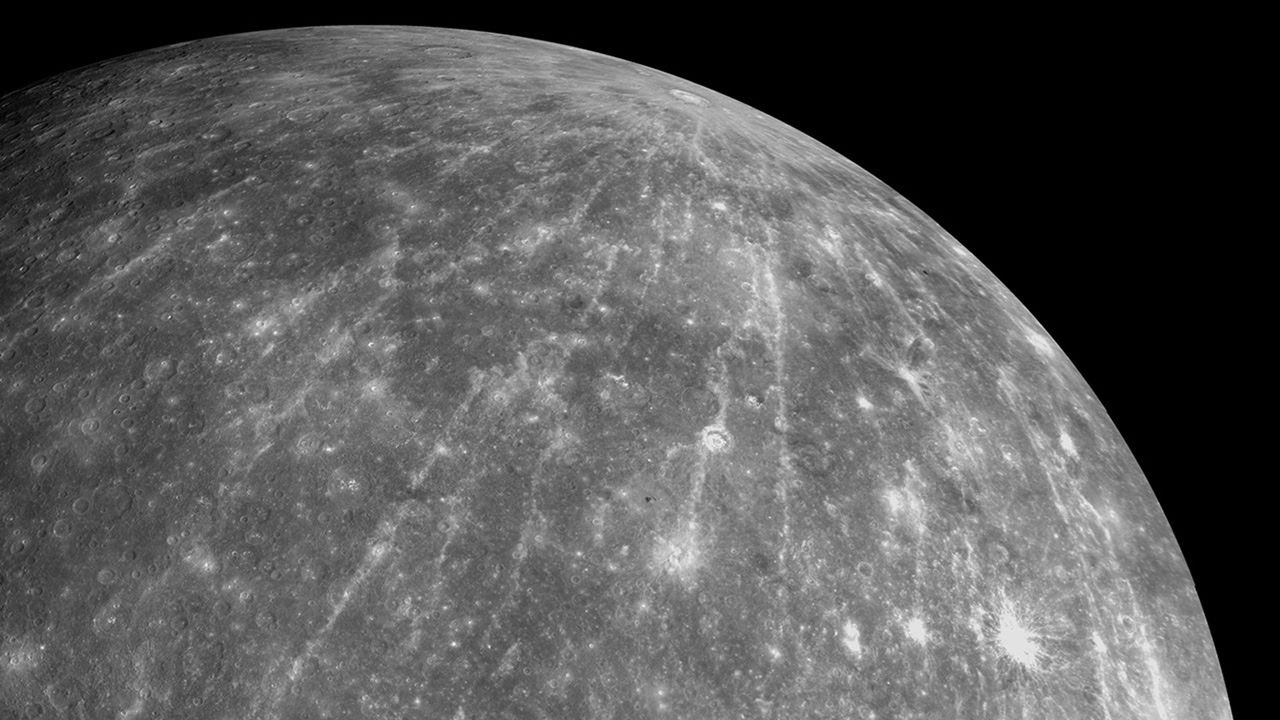
A single colossal impact may have rapidly spread water across Mercury and locked much of it into permanently shadowed polar craters — all within the span of a single Mercurian day, or 176 Earth days, …
A single colossal impact may have rapidly spread water across Mercury and locked much of it into permanently shadowed polar craters — all within the span of a single Mercurian day, or 176 Earth days, according to a new study. Being the closest planet to the sun, Mercury seems like the last place in the solar system where water ice should survive. The sun appears nearly three times larger in Mercury's sky than it does from Earth, while daytime temperatures on the scorched world can soar above 800 degrees Fahrenheit (427 degrees Celsius). Yet observations from Earth-based telescopes in the 1990s, later confirmed by NASA's MESSENGER spacecraft, revealed vast pockets of frozen water hidden inside deep craters near Mercury's poles that never receive direct sunlight. Exactly how that ice formed, however, has remained a mystery. One leading hypothesis suggests the polar ice was delivered during a relatively recent impact by a water-rich comet or asteroid — possibly in scale and age to the one that carved Hokusai crater , a prominent 60-mile-wide (97-kilometer-wide) crater in Mercury's northern hemisphere. Hokusai is known for its bright rays of debris that stretch thousands of kilometers across the planet, created when material blasted from beneath Mercury's surface was hurled outward during the impact. "How is water transported and redistributed in the aftermath of an impact on Mercury?" the researchers write in the new paper. …
Original source: Space.com
Mentioned
Earth · Maryland · Fahrenheit