Daily briefing: Mouse eyes can photosynthesize after a plant-to-animal transplant
Nature News ·
You have full access to this article via your institution. Hello Nature readers, would you like to get this Briefing in your inbox free every day? Sign up here . …
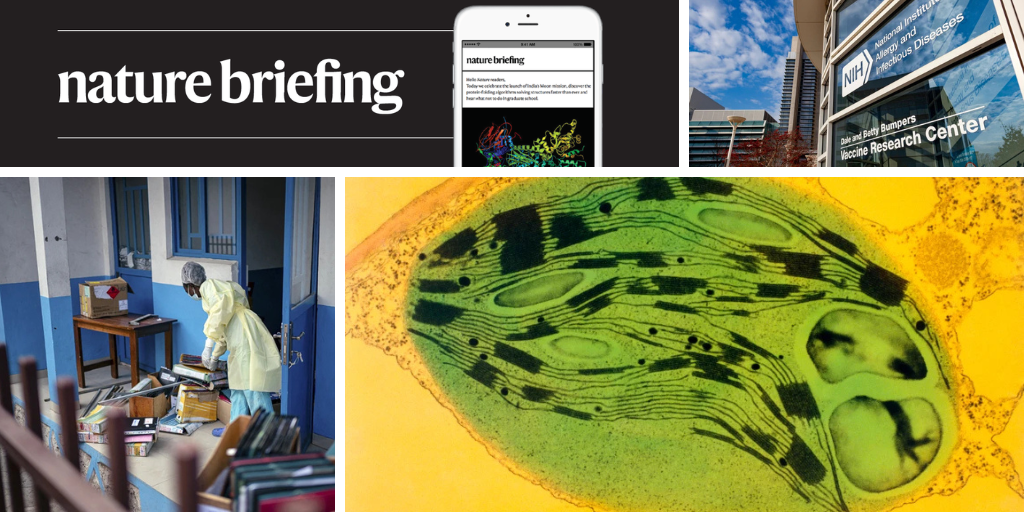
You have full access to this article via your institution. Hello Nature readers, would you like to get this Briefing in your inbox free every day? Sign up here . A chloroplast (green) dotted with the membranous stacks called thylakoid grana (black blocks). Scientists have harnessed grana to induce photosynthesis in mammalian cells. Credit: Biophoto Associates/SPL Photosynthetic machinery can be harvested from spinach and transplanted into the eyes of mice, where it transforms light into molecules that carry energy and can tame inflammation . To see how this approach might someday translate into therapeutic applications, researchers made drops, containing light-harvesting apparatus from spinach ( Spinacia oleraceae ) cells, that soothed dry-eye disease in mice. “This is very exciting, even if it’s a bit crazy now,” says biologist and study co-author David Tai Leong. Nature | 4 min read Reference: Cell paper An outbreak of Ebola in the Democratic Republic of the Congo (DRC) has been declared a public health emergency of international concern by the World Health Organization . At least 10 people had tested positive for the Ebola virus and more than 330 people had suspected infections, according to the US Centers for Disease Control and Prevention on Sunday. Infections have also been reported in neighbouring Uganda. A lab in the DRC confirmed that the outbreak was caused by the Bundibugyo species of Ebola virus, for which there is no approved vaccine or treatment. …
Original source: Nature News
Mentioned
World Health Organization · US Centers for Disease Control and Prevention