Bees have coexisted with us for over a millennia. Their name remains a mystery
NPR News ·
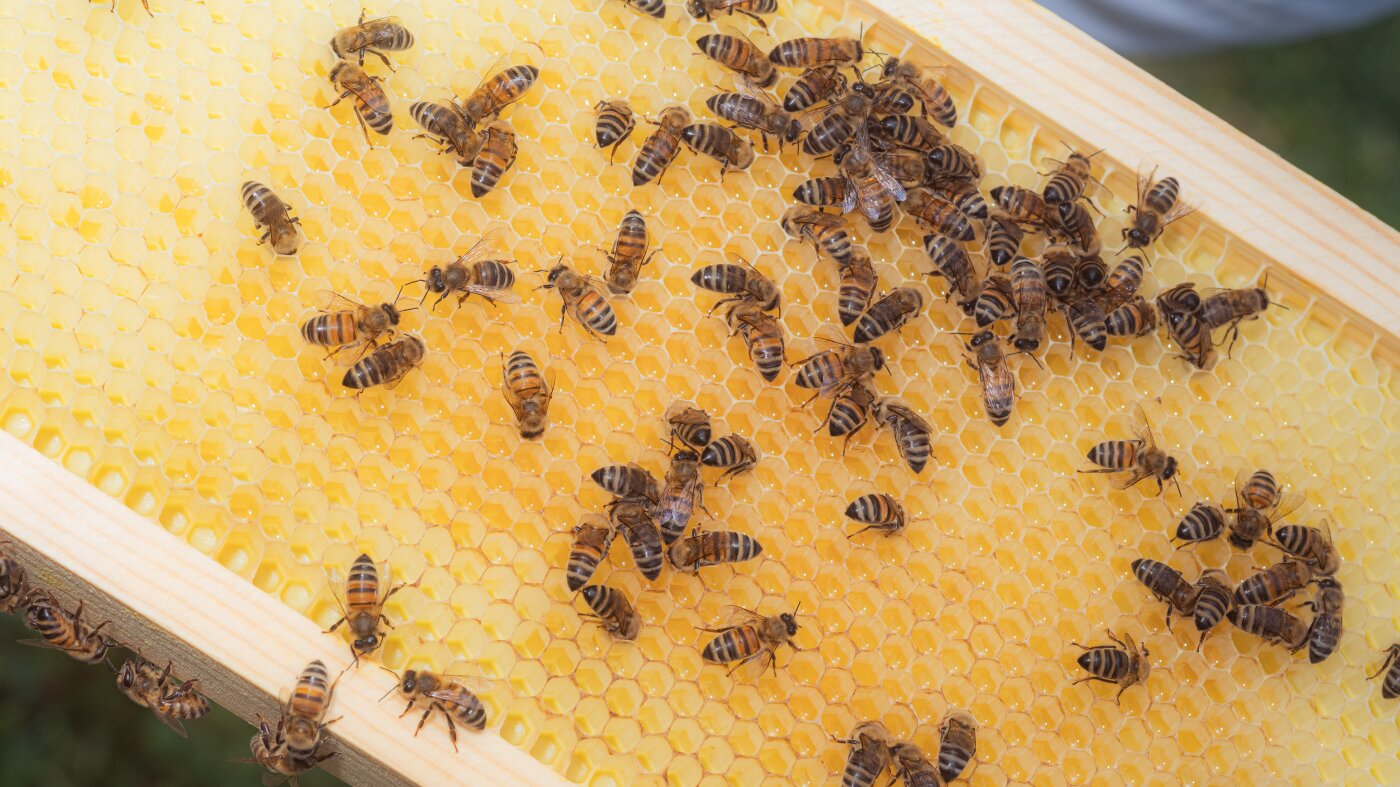
Bees in a hive in San Diego, Calif. Beekeeping has been a practice for thousands of years. Alan Nakkash for NPR hide caption toggle caption Alan Nakkash for NPR When Kendal Sager lifts the top of her …
Bees in a hive in San Diego, Calif. Beekeeping has been a practice for thousands of years. Alan Nakkash for NPR hide caption toggle caption Alan Nakkash for NPR When Kendal Sager lifts the top of her beehive, tens of thousands of bees waggle across the honeycomb — their cells filled with bright yellow, orange and pink pollen collected from flowers in Sager's neighborhood. Sager, a California master beekeeper, said bees do far more than produce that sweet substance: they pollinate crops for hundreds of types of nuts, fruits and vegetables. "Even if you don't like bees themselves, you have bees to thank for the food on your table," she said. This Wednesday is World Bee Day, which was established by the United Nations in 2018 to raise awareness about the need to protect the insects. So this installment of NPR's Word of the Week looks at the mystery behind bees' buzzy name — and why they need more of our attention than ever. Kendal Sager is also the founder of Sager Family Farm, which provides educational "reverse" field trips where bees visit the students. Alan Nakkash for NPR hide caption toggle caption Alan Nakkash for NPR Why the origin of 'bee' is difficult to trace Doug Harper, founder and editor of Etymonline.com , an etymology dictionary, said that unlike many words, the meaning of "bee" has pretty much remained the same over time. "A word like 'bee' has always been 'bee,' as far back as you can trace it," he said. …
Original source: NPR News