Teams of AI agents boost speed of research
Nature News ·
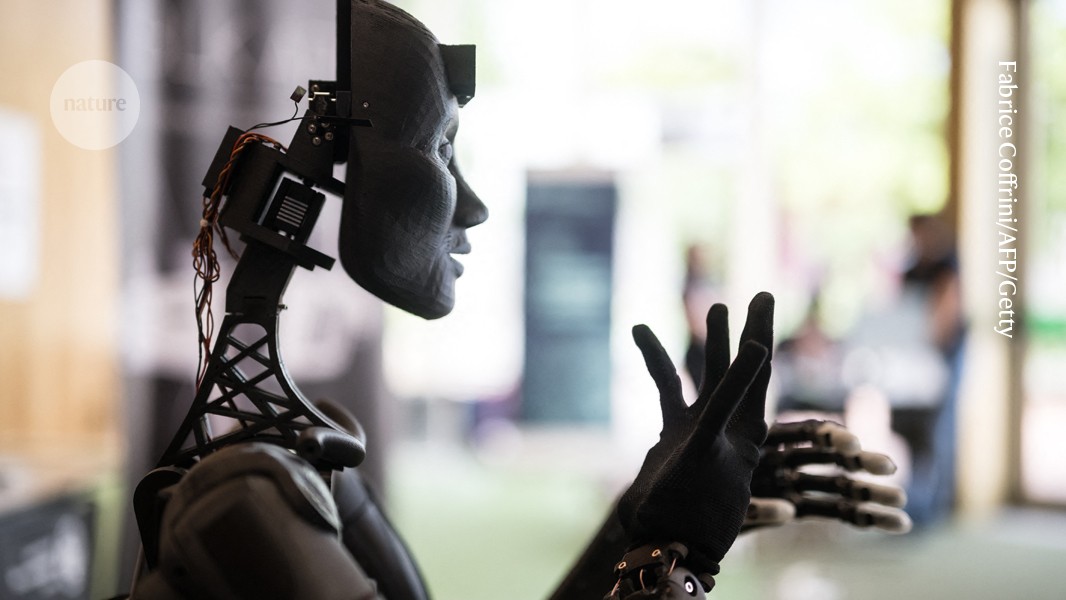
AI co-scientist systems work at a much faster pace than humans can. Credit: Fabrice Coffrini/AFP/Getty Artificial intelligence is poised to take on a more-active role in the laboratory: two new …
AI co-scientist systems work at a much faster pace than humans can. Credit: Fabrice Coffrini/AFP/Getty Artificial intelligence is poised to take on a more-active role in the laboratory: two new systems, described today in Nature 1 , 2 , use teams of AI agents to develop hypotheses, propose experiments and analyse data. Each system still relies on human input at various stages, but they boast timelines that can be remarkably shorter than when the process is left to human minds and hands alone. When the systems were asked to identify existing drugs that might be repurposed for different conditions, they arrived at plausible answers in a matter of hours. “It almost seems like an agentic, in silico implementation of the thought process in a scientist’s head,” says Vivek Natarajan, a researcher at Google DeepMind in Mountain View, California, who helped to develop one of the systems. “The goal is to give scientists superpowers.” In silico scientists In one experiment, Natarajan and his colleagues used Google’s Co-Scientist to look for approved drugs that could be repurposed to treat a form of blood cancer called acute myeloid leukaemia 1 . The system identified a list of candidate drugs, from which human researchers selected five for further study. Three of these showed promise in preliminary studies on cells grown in the lab. …
Original source: Nature News
Mentioned
AI · California · San Francisco · Mountain View · Google DeepMind