Scientists just solved a tricky asteroid-hopping spacecraft riddle
Space.com ·
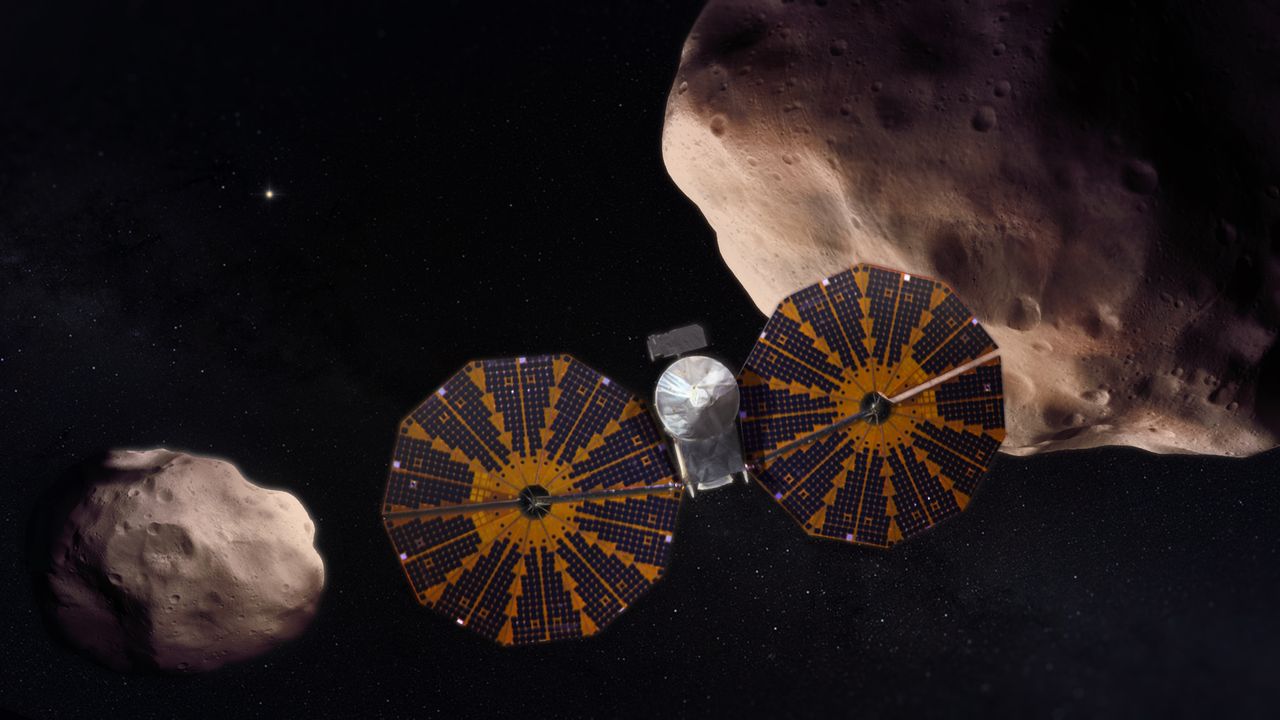
A new approach that riffs on the classic Traveling Salesperson problem could enable more efficient space missions to multiple objects that are in motion — like asteroids. …
A new approach that riffs on the classic Traveling Salesperson problem could enable more efficient space missions to multiple objects that are in motion — like asteroids. The researchers behind the fascinating solution to the problem are Isaac Rudich of the Department of Mathematical and Industrial Engineering at Polytechnique Montréal in Canada and Michael Römer, who is a decision analyst from the Faculty of Business Administration and Economics at Universität Bielefeld in Germany. "Our research is foundational, in the sense that it develops mathematical machinery that can be used by space agencies to plan missions," the duo told Space.com. The Traveling Salesperson problem is a mathematical approach to determining the shortest route for visiting multiple destinations before returning to the point of origin. That's fine when you're a double glazing salesperson visiting a dozen stationary towns and cities, but how do you calculate the optimal route when your destinations are perpetually in motion? This is the problem faced by spacecraft that are on a mission to visit multiple celestial objects. Sometimes the decision is obvious, necessitated by the availability of gravitational slingshots from planets, as illustrated by the Voyager 1 and Voyager 2 missions. However, a mission that skips from one asteroid to the next, relying on fuel stored on board rather than gravitational slingshots, is more problematic. …
Original source: Space.com