Why the Supreme Court's voting rights ruling could play a big role at the local level
NPR News ·
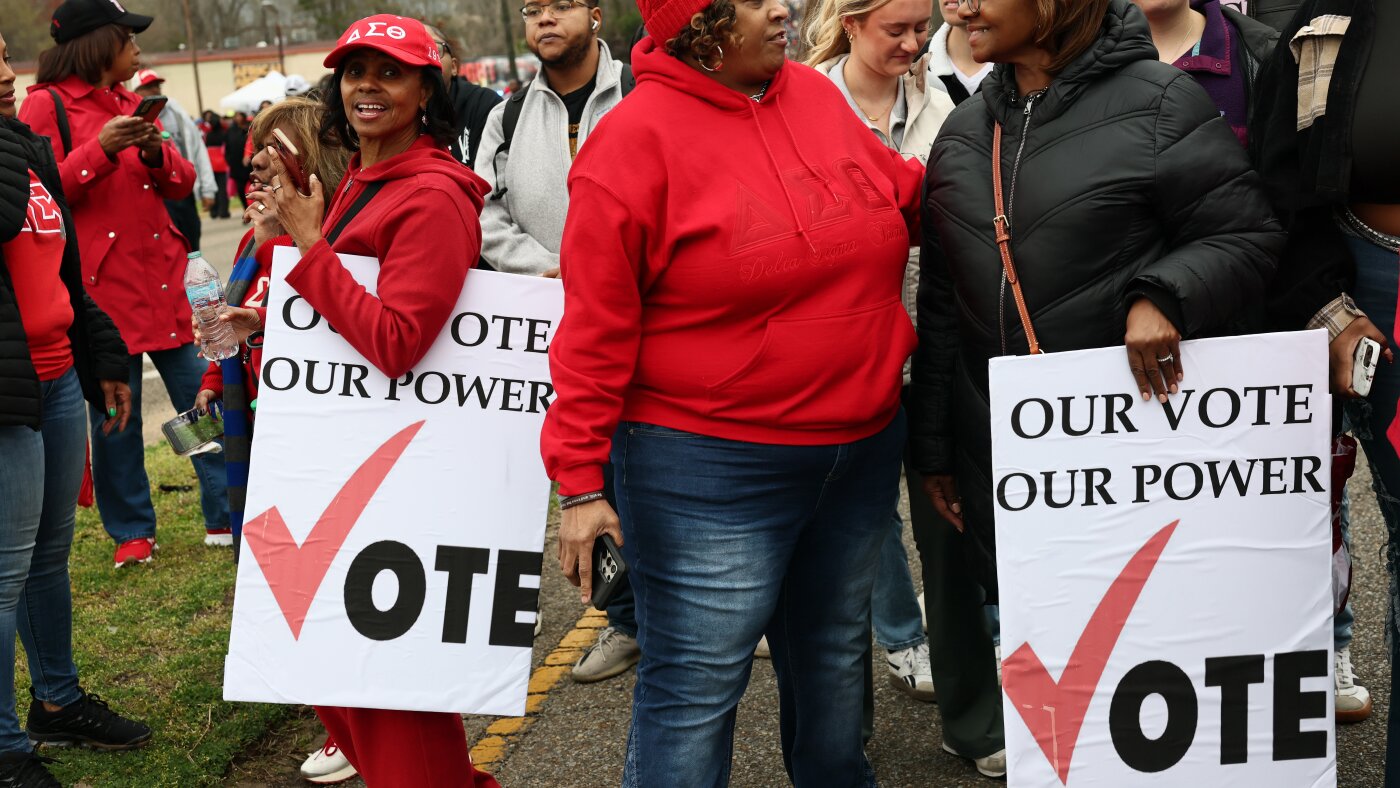
Members of Delta Sigma Theta sorority and other marchers gather in Selma, Ala., in 2025 to commemorate the 60th anniversary of the Bloody Sunday march that propelled the passing of the Voting Rights …
Members of Delta Sigma Theta sorority and other marchers gather in Selma, Ala., in 2025 to commemorate the 60th anniversary of the Bloody Sunday march that propelled the passing of the Voting Rights Act. Michael M. Santiago/ hide caption toggle caption Michael M. Santiago/ While Republican-led Southern states race to redo their congressional maps after the U.S. Supreme Court weakened the Voting Rights Act's protections against racial discrimination, the decision's effects may be felt most notably on the local level. There are active legal fights over at least 17 voting maps or election systems for state and local governments that are now reckoning with the court's ruling, an NPR analysis of federal court records has found. In the weeks since the high court released its landmark decision in Louisiana v. Callais , many lawyers in these lawsuits have been working on briefs about how they think the ruling's reinterpretation of the Voting Rights Act's Section 2 provisions in redistricting should be applied. The focus of Section 2, the Supreme Court's conservative supermajority ruled, should now be intentional racial discrimination, a legal standard that's notoriously difficult to prove in court. Many legal experts see this change as a threat to representation of racial minorities and an incentive for more partisan gerrymandering at all levels of government — including state legislatures, county commissions and school districts. …
Original source: NPR News
Mentioned
United States Supreme Court · washington dc · Pennsylvania · North Carolina · Native American · Brennan Center for Justice