Watch NASA's new Mars helicopter rotor break the speed of sound (video)
Space.com ·
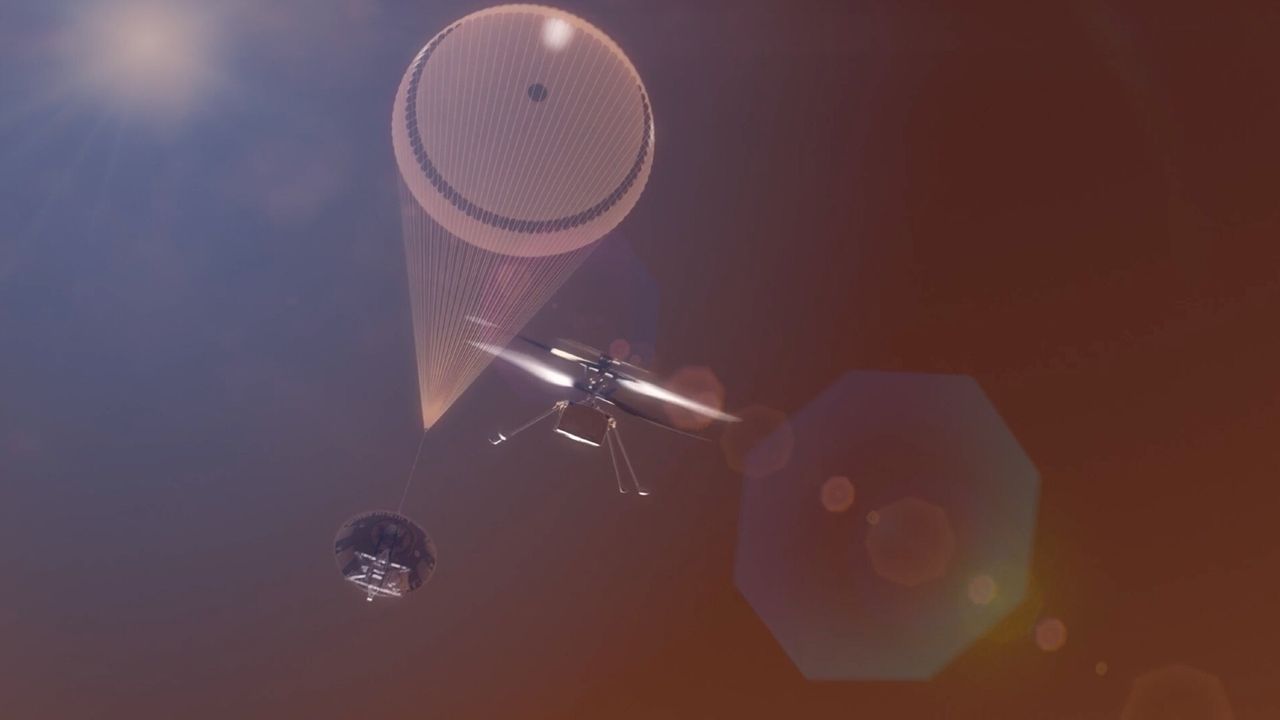
NASA is testing the limits of future Mars aircraft as it works to develop a next-generation fleet of helicopters that will fly through the thin atmosphere of the Red Planet. …
NASA is testing the limits of future Mars aircraft as it works to develop a next-generation fleet of helicopters that will fly through the thin atmosphere of the Red Planet. In March, engineers at NASA's Jet Propulsion Laboratory (JPL) in Southern California completed tests on rotor designs that could be used to fly those drones, spinning the experimental helicopter blades fast enough for their tips to exceed Mach 1 (the speed of sound). A total of 137 tests were performed inside a state-of-the-art chamber that can simulate Mars' atmosphere by replacing the air with a low-density concentration of carbon dioxide. This work provided NASA with valuable data, which engineers say could increase the vehicle's lift capability by 30%, allowing future Mars helicopters to carry heavier science instruments and bigger batteries over greater distances. Engineer Jaakko Karras inspects a next-generation Mars helicopter rotor blade prior to testing it at supersonic speeds in the Space Simulator at NASA's Jet Propulsion Laboratory in November 2025. (Image credit: NASA/JPL-Caltech) The first-ever aerodynamic flight on Mars was performed on April 19, 2021 by NASA's Ingenuity helicopter , a prototype designed to determine if a helicopter could be effective in such a thin atmosphere. The little rotorcraft far exceeded mission managers' expectations, completing a total of 72 flights over the course of nearly three years. …
Original source: Space.com
Mentioned
Skyfall · Mars · JPL-Caltech · Silicon Valley · Southern California · Mars Exploration Program · Jet Propulsion Laboratory