Three's a party: US, China, and now Russia are on the prowl in GEO
Ars Technica ·
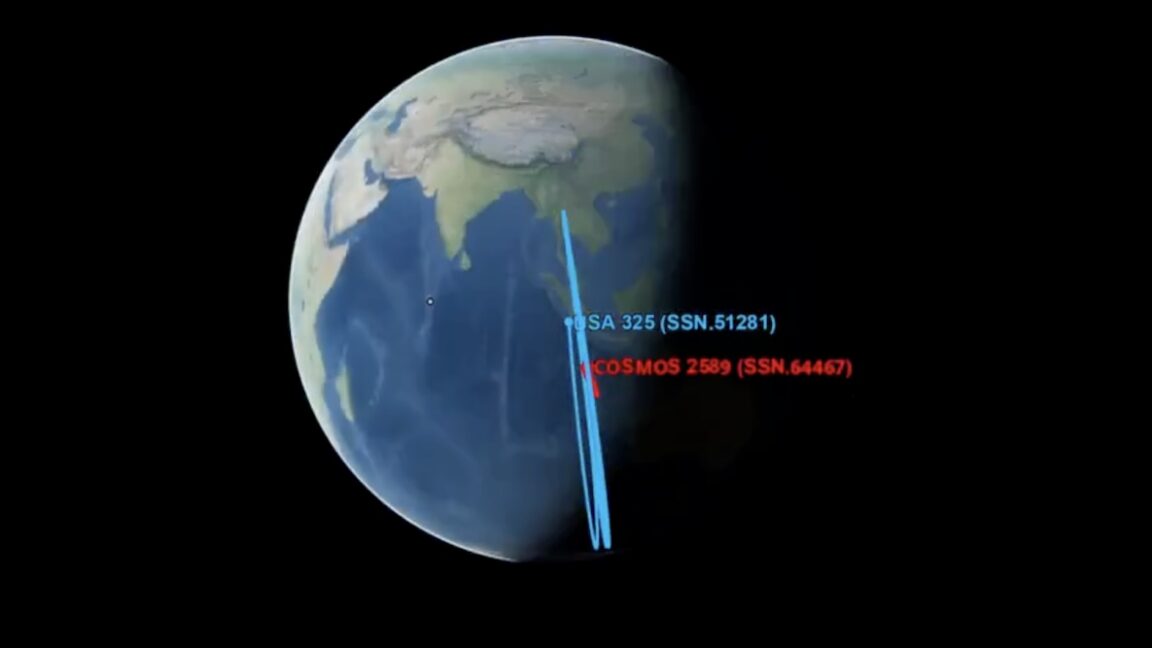
“One of the dynamics of the current geosynchronous cat-and-mouse activity is your desired imaging target may try to run away from you, and as it goes away from you, may even turn around, and then get …
“One of the dynamics of the current geosynchronous cat-and-mouse activity is your desired imaging target may try to run away from you, and as it goes away from you, may even turn around, and then get a good look at you,” said retired Lt. Gen. John Shaw, a former deputy commander of US Space Command. It is not surprising that US commanders wanted to get a look at Kosmos 2589 as soon as it arrived in GEO, Shaw told Ars. “One of the current tactics each side uses is to try to look at a potential target when it first arrives on orbit,” he said. “It’s sort of like an airplane just coming off the runway, because it’s still trying to orient and get checked out for operations. All of this is visible to amateur astronomers and sky watchers. What we need to do is evolve our own practice to the point where we don’t need that checkout period, and we can start maneuvering immediately. I expect others will do the same.” Fuel limitations on the GSSAP satellites, made by Northrop Grumman, force US commanders to think twice about sending them off to look at every shiny new object that arrives in GEO. “We want to be able to maneuver for advantage,” said Gen. Stephen Whiting, commander of US Space Command, in an event Tuesday hosted by the Mitchell Institute for Aerospace Studies. “And there’s a number of technologies that could enable that. …
Original source: Ars Technica