SNOR promotes translation restart after dormancy
Nature News ·
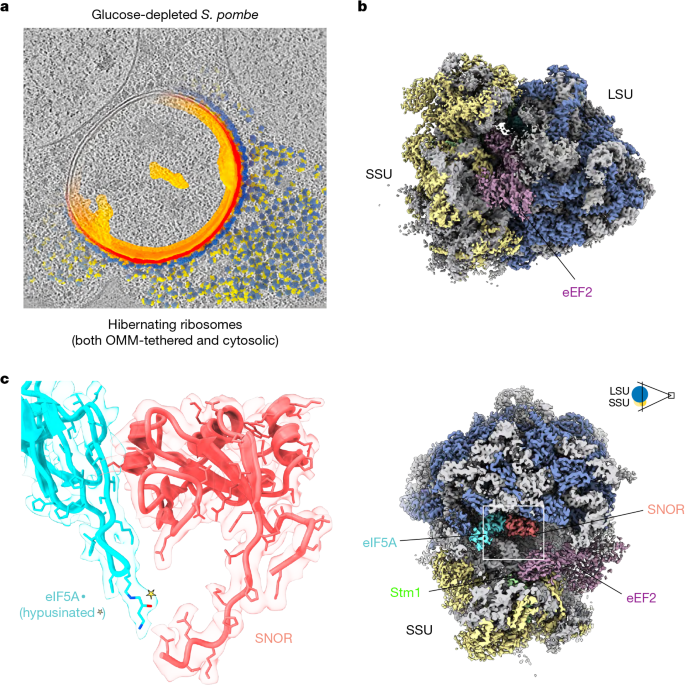
Sample preparation for cryo-ET Cryo-ET samples were prepared using 200-mesh R2/2 copper grids (Quantifoil) plasma-cleaned for 30 s in 75% argon/25% oxygen using a 1070 plasma cleaner (Fischione). S. …
Sample preparation for cryo-ET Cryo-ET samples were prepared using 200-mesh R2/2 copper grids (Quantifoil) plasma-cleaned for 30 s in 75% argon/25% oxygen using a 1070 plasma cleaner (Fischione). S. pombe cells were grown for 7 days in EMM containing 0.5% (w/v) glucose and diluted in glucose-free EMM to OD 600 = 0.6 immediately before freezing. A 4 µl aliquot was applied to the carbon side of the grid and back-side blotted for 1 s (Whatman 597 paper; paper contact sensing mode with 1.5 mm movement) using a Leica EM GP2 plunger operated at 23 °C and 100% humidity. Grids were vitrified in liquid ethane. Cryo-FIB milling Vitrified grids were mounted in Cryo-FIB Autogrids (ThermoScientific, 1205101) under liquid nitrogen and transferred to an Aquilos 2 cryo-FIB/SEM (ThermoScientific). The stage and anti-contamination shield were maintained at −194 °C. After scanning electron microscope screening (5 kV, 13 pA), grids were coated with trimethyl(methylcyclopentadienyl)platinum( IV ) (GIS, 120 s), preceded and followed by 15 s sputter coating (30 mA). Positions were set using MAPS, and lamellae were milled using AutoTEM (30 kV; 1 nA to 30 pA) and thinned manually to ~160 nm at 30 pA. During final thinning, the stage was tilted by +0.5° to improve surface polishing and reduce curtaining. A final sputter coating (3 s, 10 mA) reduced charging during transmission electron microscopy acquisition and facilitated tilt-series alignment. …
Original source: Nature News