Antifungal resistance is growing – will new treatments turn the tables?
Nature News ·
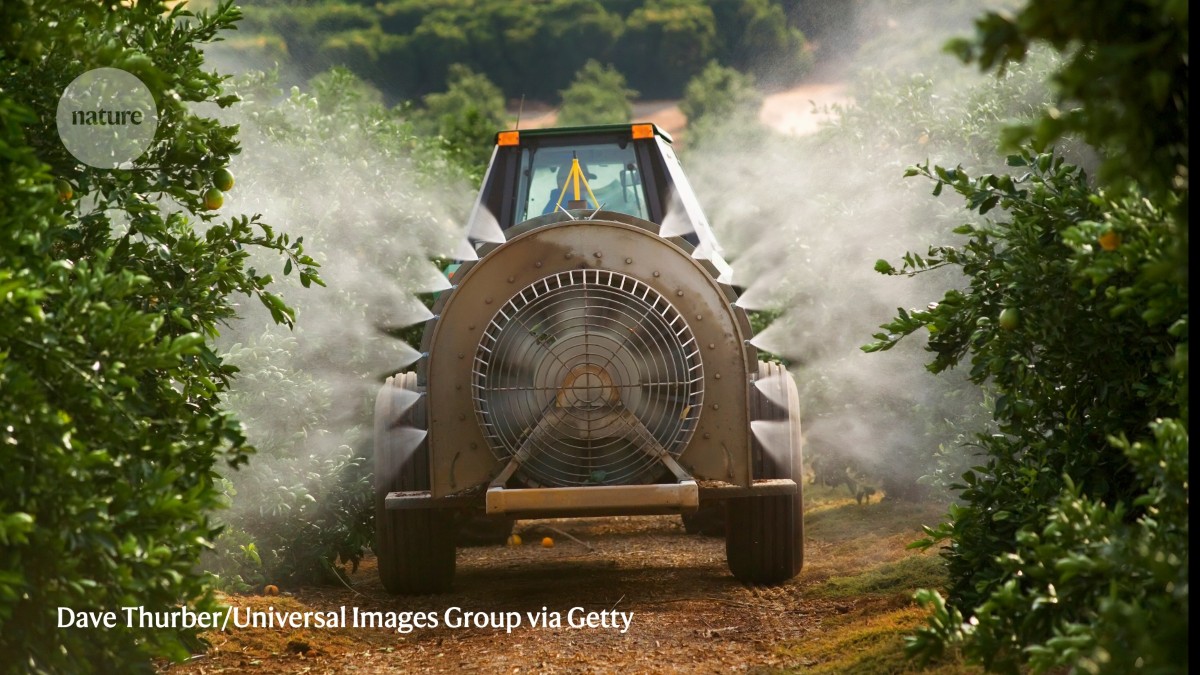
Fungicides are often sprayed onto crops in large quantities to prevent fungal diseases occurring later in the season. Credit: Dave Thurber/Design Pics Editorial/Universal Images Group via Getty Not …
Fungicides are often sprayed onto crops in large quantities to prevent fungal diseases occurring later in the season. Credit: Dave Thurber/Design Pics Editorial/Universal Images Group via Getty Not for nothing are fungi often described as the ‘hidden kingdom’. Many exist mainly or entirely underground, and only around 5% of the world’s fungal species are thought to have been discovered so far. Although the problem of bacteria becoming resistant to the drugs used to defeat them has long attracted attention, its fungal parallel has flown mostly under the radar. “Very little research is done on human fungal infections compared to other types of infections,” says Matthew Fisher, a fungal epidemiologist at Imperial College London. He is one of a number of researchers who think that this urgently needs to change. “When it comes to antifungal resistance in the clinic, the situation is deteriorating alarmingly,” he says. Nature Outlook: Antimicrobial resistance Common fungal infections, such as thrush and athlete’s foot, are merely a source of discomfort. Most people can easily repel even the deadliest fungal pathogen, Aspergillus fumigatus , which is abundant in decaying plant matter and inhaled daily by most people without them noticing. But the same cannot be said for individuals with weakened immune defences. For people with chronic lung diseases or HIV, or who are taking corticosteroids or other immunosuppressive drugs, a fungal infection can have serious consequences. …
Original source: Nature News
Mentioned
China · Dutch · Netherlands