'Like putting a microscope into the core of the sun': World's 1st space-based neutrino detector launches to orbit
Space.com ·
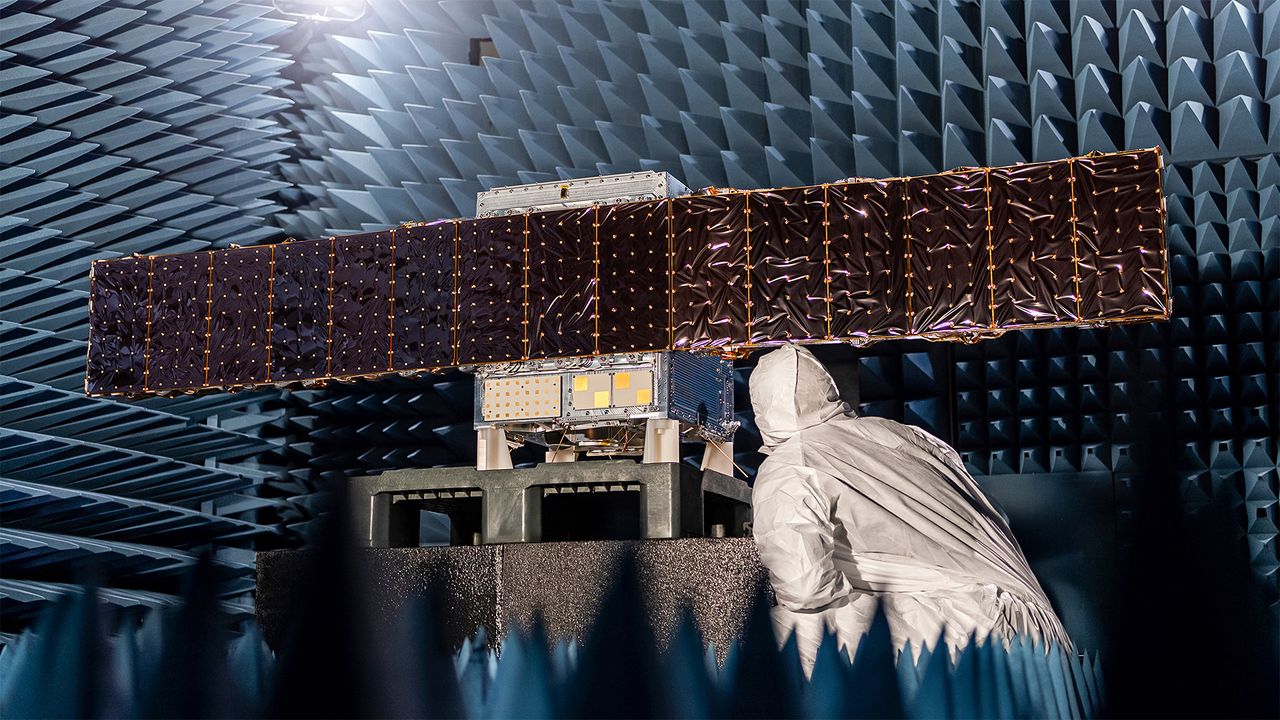
The world's first space-based neutrino detector launched to space last week to study elusive neutrino particles that constantly bombard Earth. …
The world's first space-based neutrino detector launched to space last week to study elusive neutrino particles that constantly bombard Earth. The mission will test technology that could help researchers in the future to unravel hidden processes taking place deep inside the sun. The detector, made of crystals of gallium and tungsten, is embedded in a 3U cubesat (about 12 inches long and 4 inches wide, an equivalent to 30 and 10 centimeters), which will orbit the planet at the altitude of 310 miles (500 kilometers) for about two years. The small instrument rode to orbit on the SpaceX CAS500-2 rideshare mission on May 3. The project, called SNAPPY (for Solar Neutrino Astro-Particle PhYsic), was conceived by Wichita State University professor of physics and mathematics Nickolas Solomey. The project aims to validate the underlying technology for a future mission that could someday take a neutrino detector to the vicinity of the sun. "Neutrinos on Earth are pretty rare, so to detect neutrinos on Earth, you need very big detectors," Solomey told Space.com. …
Original source: Space.com
Mentioned
World · Big Bang · South Pole