The newest AI boom pitch: Host a mini data center at your home
Ars Technica ·
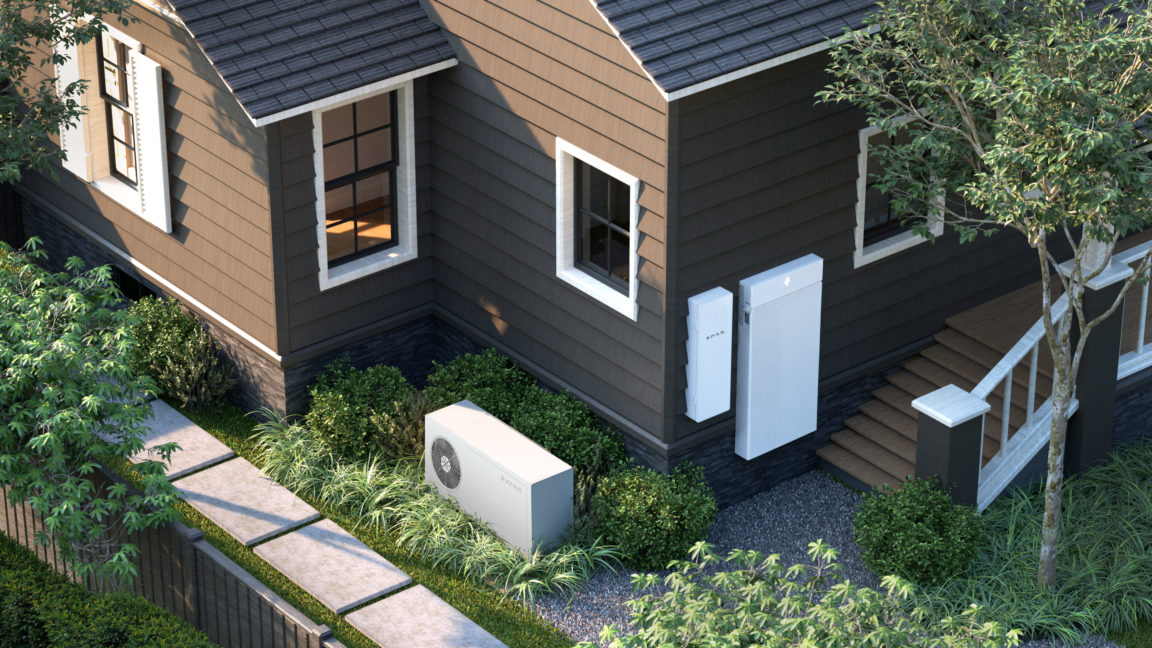
Such a distributed computing network makes sense in that “computation for AI inference can and should be distributed at the ‘edge,’ deployed on smaller platforms closer to population centers and …
Such a distributed computing network makes sense in that “computation for AI inference can and should be distributed at the ‘edge,’ deployed on smaller platforms closer to population centers and users,” said Benjamin Lee , a computer architect and engineer at the University of Pennsylvania, in correspondence with Ars. “The strategy could impose much smaller impacts on the grid because inference requires a few GPUs, unlike training which requires thousands of them working in concert,” he said. However, AI inference tasks can be as varied as document question-and-answer, software code generation, and multi-turn conversations—each with different computational requirements and performance expectations, Lee cautioned. So it will be important to ensure that individual compute nodes can deliver the performance necessary for each task, along with maintaining network connectivity among the nodes. Lee also questioned whether it’s necessary to downsize data centers to the “granularity of a few GPUs” in order to reduce their burden on the power grid. He speculated that deploying conventional 20-megawatt data centers instead of 1-gigawatt hyperscale data centers could prove similarly beneficial. The startup SPAN envisions a 100-home pilot deployment of XFRA nodes in 2026 followed by rapid scaling in 2027. The startup SPAN envisions a 100-home pilot deployment of XFRA nodes in 2026 followed by rapid scaling in 2027. Credit: SPAN Then there is the issue of security. …
Original source: Ars Technica
Mentioned
AI · Reddit · Nvidia · Silicon Valley