British Steel nationalisation: what went wrong, and what happens now?
The Guardian World ·
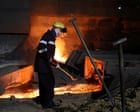
Four queens – blast furnaces named after Anne, Bess (Elizabeth), Victoria and Mary – loom over the British Steel works at Scunthorpe. …
Four queens – blast furnaces named after Anne, Bess (Elizabeth), Victoria and Mary – loom over the British Steel works at Scunthorpe. Within days the queens could be under public ownership, after Keir Starmer on Monday promised legislation to nationalise the plant. “Strong nations in a world like this need to make steel,” Starmer said on Monday in a speech. The prime minister was hoping decisive action would fend off challenges to his leadership. It comes 13 months after the government recalled parliament for a historic Saturday sitting to ram through legislation to take control of the steelworks. Jingye Steel, a Chinese company, has remained the nominal owner, but with government officials at the helm. Nationalisation, expected to be included in Wednesday’s king’s speech , would be the latest stage in the tortuous history of the plant. How did we get here? The first iron ore was discovered in Scunthorpe in 1859 by a local landowner, helping Britain’s steel industry to become the largest in the world in the late 19th century. The industry had been in and out of public ownership – nationalised in 1951, privatised two years later, nationalised in 1967. UK steel production peaked in the 1970s, but it started to struggle before Margaret Thatcher’s government slashed jobs and plants, and privatised the remainder again in 1988. At first British Steel was a member of the FTSE 100. Ownership of the Scunthorpe steelworks eventually passed in 2007 to India’s Tata Steel. …
Original source: The Guardian World
Mentioned
Elizabeth · Manchester · Tata Steel · Conservative · Keir Starmer · Margaret Thatcher