Satellites spy one of Russia's most active volcanoes melting snow from the inside out
Space.com ·
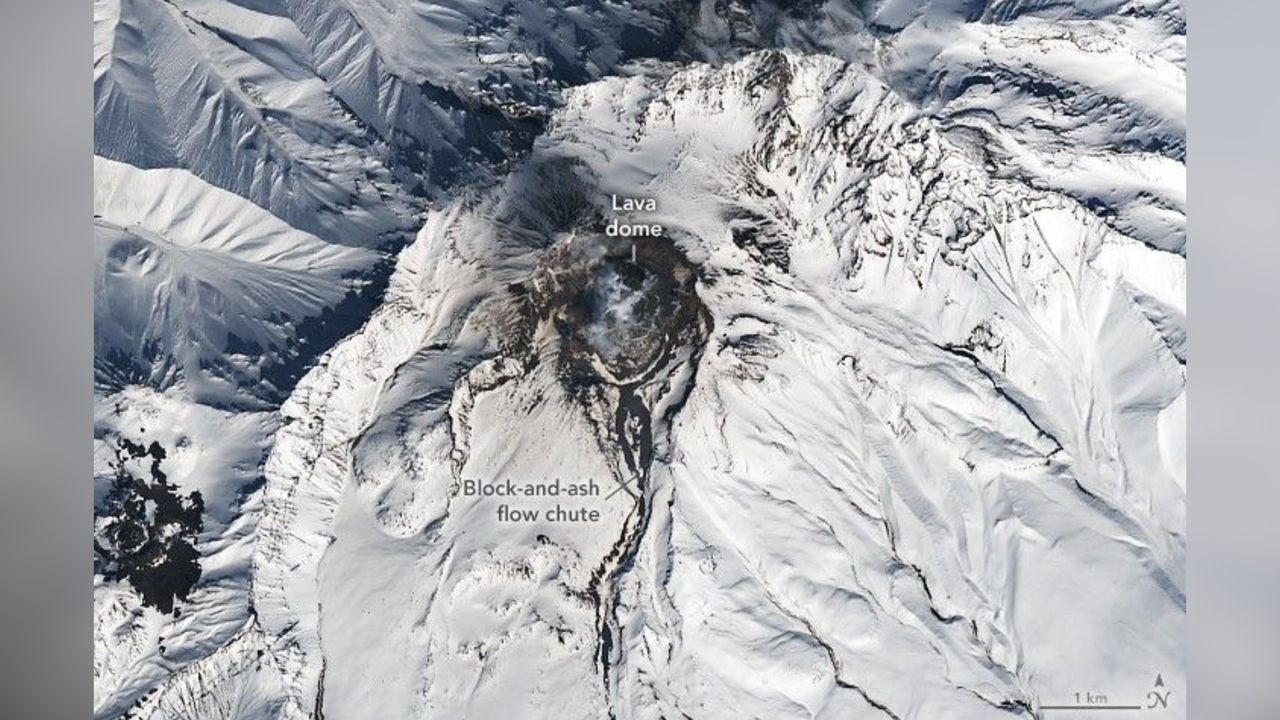
A growing lava dome and dark flow channels are visible inside Shivelyuch volcano's caldera in this detailed Landsat 9 image captured on April 23, 2026. …
A growing lava dome and dark flow channels are visible inside Shivelyuch volcano's caldera in this detailed Landsat 9 image captured on April 23, 2026. (Image credit: NASA Earth Observatory / Lauren Dauphin) Fresh satellite images have captured one of Russia's most active volcanoes melting snow from the inside out as volcanic heat continues to seep through the frozen landscape of the Kamchatka Peninsula. Images captured by the Landsat 9 satellite on April 23 show dark channels of ash and volcanic debris cutting through the snowy slopes of Shivelyuch volcano in far eastern Russia. Shivelyuch (also spelled Shiveluch) is the northernmost active volcano on Kamchatka and one of the most active volcanoes on Earth , according to NASA Earth Observatory . The volcano is known for near-constant activity, with satellites frequently detecting ash deposits, heat signatures and avalanches of hot rock flowing down its slopes. At the center of the volcano sits a growing lava dome — a mound of thick, slow-moving lava that has been expanding in recent months inside Shivelyuch's horseshoe-shape crater, according to reports from the Kamchatka Volcanic Eruption Response Team (KVERT) cited by NASA Earth Observatory. As parts of the unstable dome collapse, they can trigger fast-moving pyroclastic flows made of hot ash, gas and volcanic rock. These flows leave behind thick deposits that can hold heat for months or even years after an eruption. …
Original source: Space.com