New James Webb Space Telescope images reveal how massive star clusters can reshape galaxies
Space.com ·
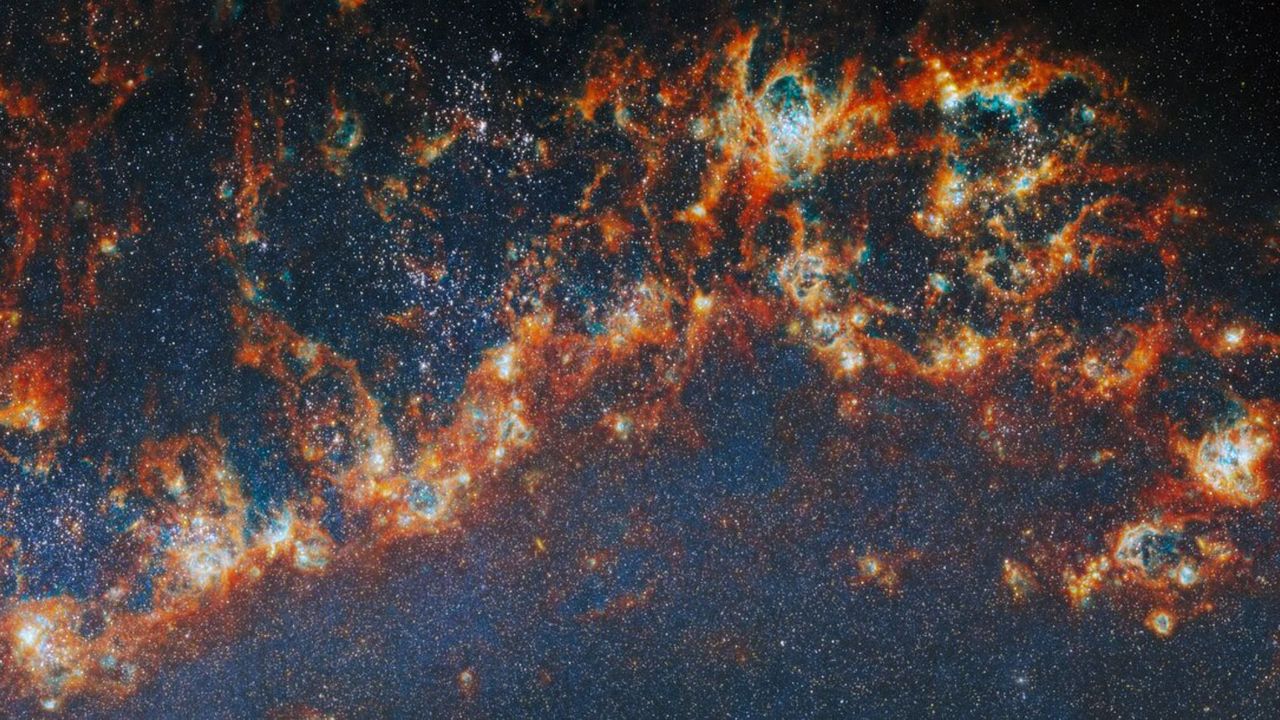
Astronomers have captured an extraordinary new look at the hidden birthplaces of star clusters, uncovering fresh clues about how galaxies evolve — and how young planets may be shaped by their stellar …
Astronomers have captured an extraordinary new look at the hidden birthplaces of star clusters, uncovering fresh clues about how galaxies evolve — and how young planets may be shaped by their stellar environments. Using observations from the James Webb Space Telescope (JWST) and the Hubble Space Telescope , astronomers studied nearly 9,000 young star clusters across four nearby galaxies: Messier 51, Messier 83, NGC 628 and NGC 4449. The newly released images reveal glowing clouds of gas and dust where thousands of stars are actively forming, while also highlighting the JWST's growing ability to uncover hidden galactic structure. Brilliant knots of newborn stars, dark rivers of dust and glowing cavities carved by stellar winds combine to create a vivid portrait of galaxies in constant motion. While the JWST's infrared vision allowed scientists to peer through thick cosmic dust, Hubble traced older, fully exposed clusters in visible light. Together, the observations allow researchers to study star clusters from their earliest, dust-shrouded stages to fully emerged stellar groups, according to a statement from NASA. Composite observations from the James Webb Space Telescope and Hubble Space Telescope reveal glowing star-forming regions and dust-filled structures in this image. (Image credit: ESA/Webb, NASA & CSA, A. Pedrini, A. …
Original source: Space.com
Mentioned
JWST · Sweden · Hubble Space Telescope · James Webb Space Telescope