Black holes slamming into scorching stars may be causing mysterious blue flashes in the cosmos
Space.com ·
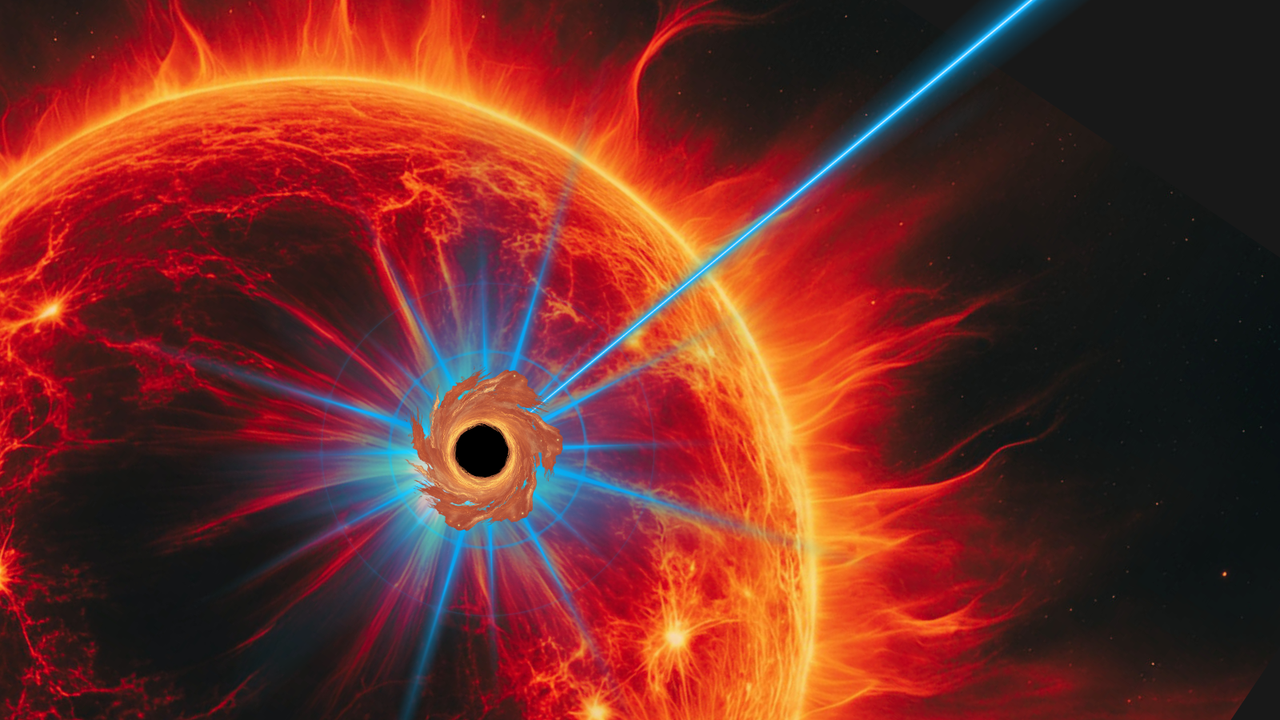
Out in the universe, there exist mysterious and powerful bright blue cosmic explosions called Luminous Fast Blue Optical Transients (LFBOT) — and new research may finally have some answers as to …
Out in the universe, there exist mysterious and powerful bright blue cosmic explosions called Luminous Fast Blue Optical Transients (LFBOT) — and new research may finally have some answers as to where these strange blasts come from. The first of these explosions was spotted in 2018, and only 14 have been detected since, leading to a solid mystery for astronomers. Now, however, the team behind the new research believes the events are caused when a compact stellar remnant, like a black hole or a neutron star , slams into the universe's hottest class of star, massive stellar bodies called Wolf-Rayet stars . Scientists have been trying to figure out the origins of LFBOTs for quite some time and have even proposed a wealth of models to account for the existence of these events. The interest likely comes from LFBOTs remarkably evolving faster than other cosmic explosions, or "transients," peaking and fading in a matter of days. LFBOTs also stand out because of their unique color: They remain blue throughout much of their evolution, indicating they stay incredibly hot all throughout. Those other proposed potential origins for LFBOTs range from the death of massive stars in so-called core-collapse supernovas to extreme tidal disruption events (TDEs), involving very massive black holes ripping up and devouring stars . …
Original source: Space.com