New moon of May 2026 brings stunning views of the Milky Way, Venus and Mars
Space.com ·
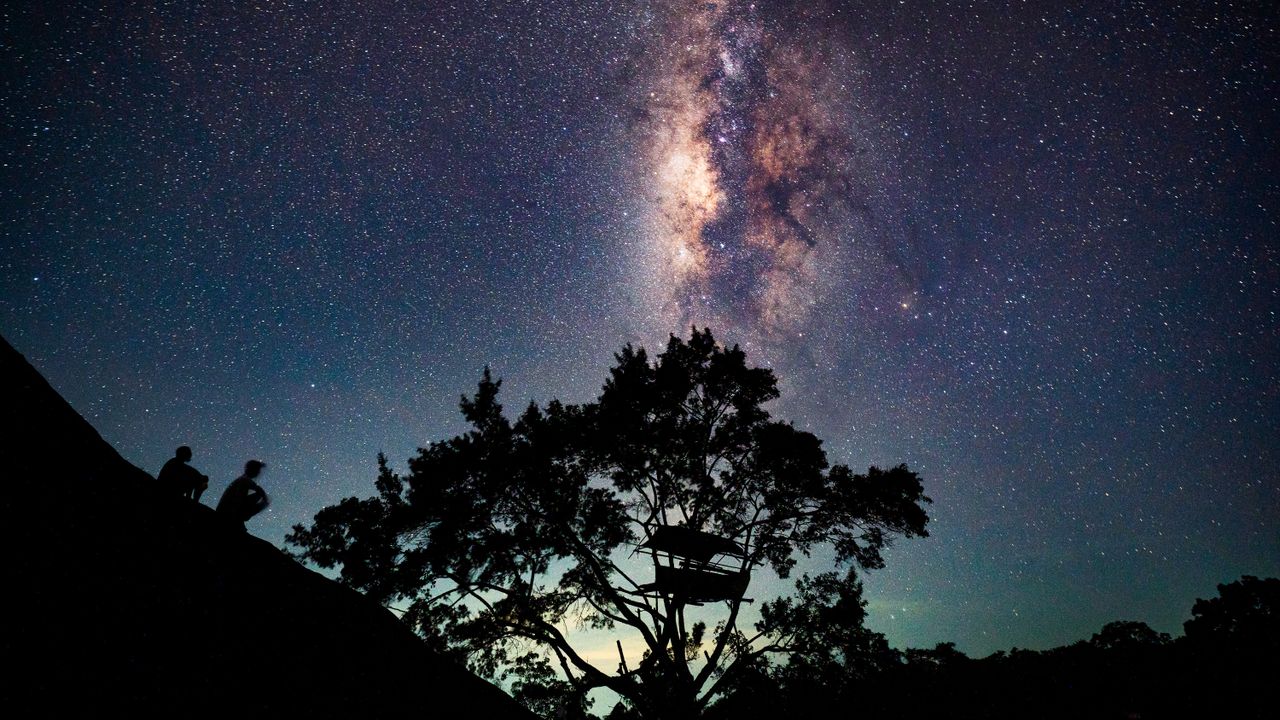
The May new moon arrives this weekend, ushering in several dark moonless nights perfect for exploring the majesty of our Milky Way, glimmering spring constellations and the ever-shifting procession …
The May new moon arrives this weekend, ushering in several dark moonless nights perfect for exploring the majesty of our Milky Way, glimmering spring constellations and the ever-shifting procession of the planets. May's new moon phase occurs at 4:01 p.m. EDT (2001 GMT) on May 16, as the moon passes close to the sun in the daytime sky. The nights surrounding the new moon present beautifully dark skies for stargazers looking to navigate the sea of stars, nebulas and galaxies that haunt the post-sunset realm. Visible planets Turn your gaze west at sunset to spot Venus glowing as a bright " evening star " a little over 20 degrees above the horizon — roughly the width of two clenched fists held at arm's length against the night sky. Jupiter glows another 20 degrees to the upper left of Venus, with Castor and Pollux , the brightest stars in the constellation Gemini , shining above. A pair of 10X50 binoculars will reveal a shoal of star-like objects surrounding the gas giant . These are Jupiter's largest natural satellites Io , Europa , Ganymede and Callisto , which are collectively known as the Galilean Moons in honor of their discoverer, the famed Italian astronomer Galileo Galilei . Early birds are treated to an entirely different cast of planets as Saturn shines above the eastern horizon in the hour preceding dawn, with Mars rising to its lower left, chased by the golden light of the coming sun. …
Original source: Space.com