Even the unconscious brain can learn — and predict what you’ll say next
Nature News ·
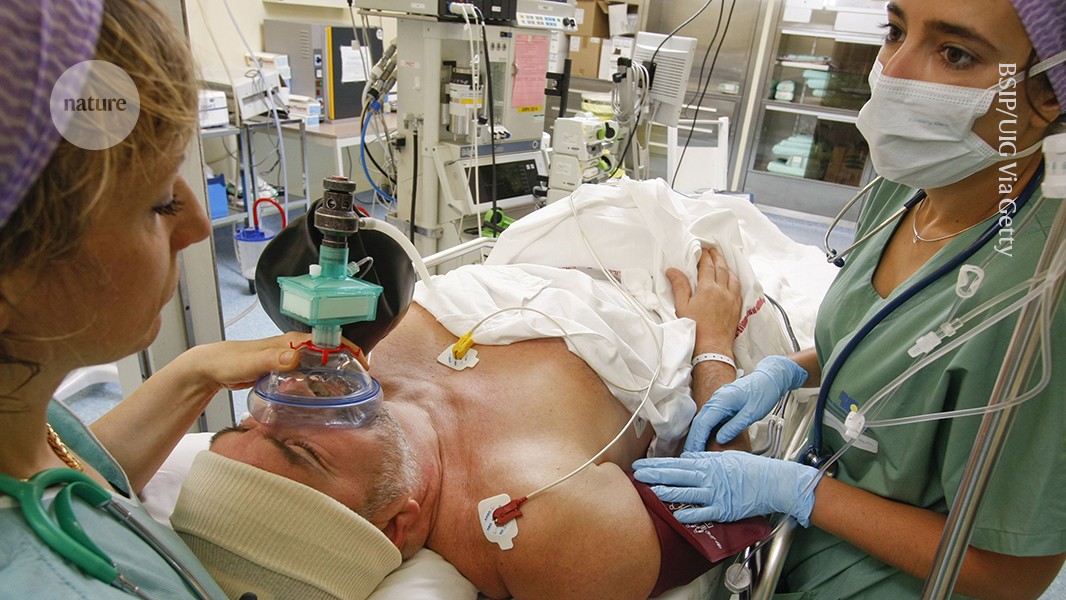
The brains of people under general anaesthesia continue to process words and sounds, a study finds. Credit: BSIP/UIG Via Getty People given general anaesthesia fall into a coma-like state in which …
The brains of people under general anaesthesia continue to process words and sounds, a study finds. Credit: BSIP/UIG Via Getty People given general anaesthesia fall into a coma-like state in which their memory and perception of pain are switched off. But new data reveal that the hippocampus — a deep brain structure crucial for memory — remains remarkably active, parsing the grammar and meaning of spoken words and even anticipating what will be said next. Anaesthetized brains can still process podcasts The research, published today in Nature 1 , challenges the assumption that complex cognition, such as grasping semantics and forecasting future events, can occur only if a person is fully conscious. By observing people’s individual neurons firing in real time while they are under anaesthesia, researchers discovered that the brain receives stimuli and actively processes what those signals mean. “The brain has developed such amazing, sophisticated mechanisms for doing all these complex tasks all day long, that it can do some of these things even without us being aware,” says Sameer Sheth, a neurosurgeon at Baylor College of Medicine in Houston, Texas. Probing the unconscious brain Previous studies have shown 2 that the parts of the brain that first detect sensory input can still register simple sounds while a person is unconscious. But it has remained unclear whether other, deeper regions of the brain are capable of complex cognition while someone is unconscious. …
Original source: Nature News