Are attention spans really shrinking? What the science says
Nature News ·
A century before social-media bans and advice to disable device notifications, the inventor and science-fiction writer Hugo Gernsback proposed a more extreme way to avoid distraction: an isolating …
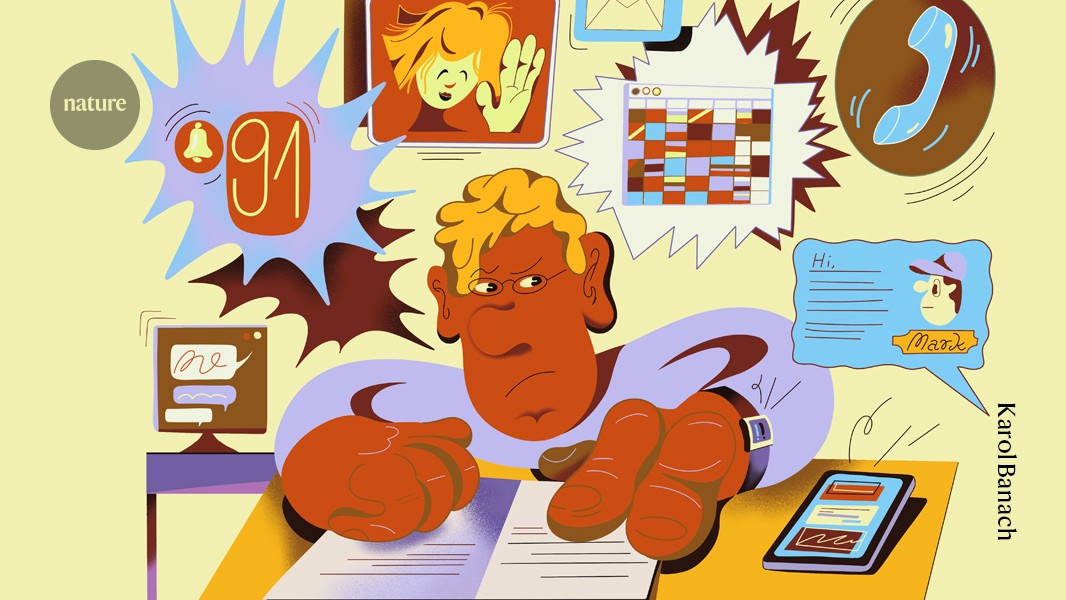
A century before social-media bans and advice to disable device notifications, the inventor and science-fiction writer Hugo Gernsback proposed a more extreme way to avoid distraction: an isolating wooden helmet. Outside influences, he said, were “the greatest difficulty that the human mind has to contend with”. Gernsback’s isolator device — part diving suit, part monastic cell — did help him to work, he said, but it came with a risk of suffocation. He later installed an air supply. Concerns that sustained thought is under assault have become even more acute in the digital era. Smartphones buzz, Internet tabs multiply and television episodes carry regular reminders to help people keep track of the plot. Surveys suggest that we feel less able to concentrate, teachers report distracted students and headlines declare that our attention spans are shrinking. Inventor Hugo Gernsback wearing his ‘isolator’ wooden helmet. Credit: Bettmann/Getty Research across psychology and neuroscience, however, has built up a more nuanced picture of what is happening to our attention spans. The results suggest that people do flit from one task to another more frequently than they did in previous decades, and that this switching is often detrimental to performance. But there is little evidence that the brain’s fundamental ability to concentrate has been impaired. This suggests that if we can shut down the distractions of our environment, it is possible to recover focus. …
Original source: Nature News
Mentioned
Illinois · UK · University of Chicago · University College London