A tiny world at the edge of our solar system grew a mysterious atmosphere, and we don't know how
Space.com ·
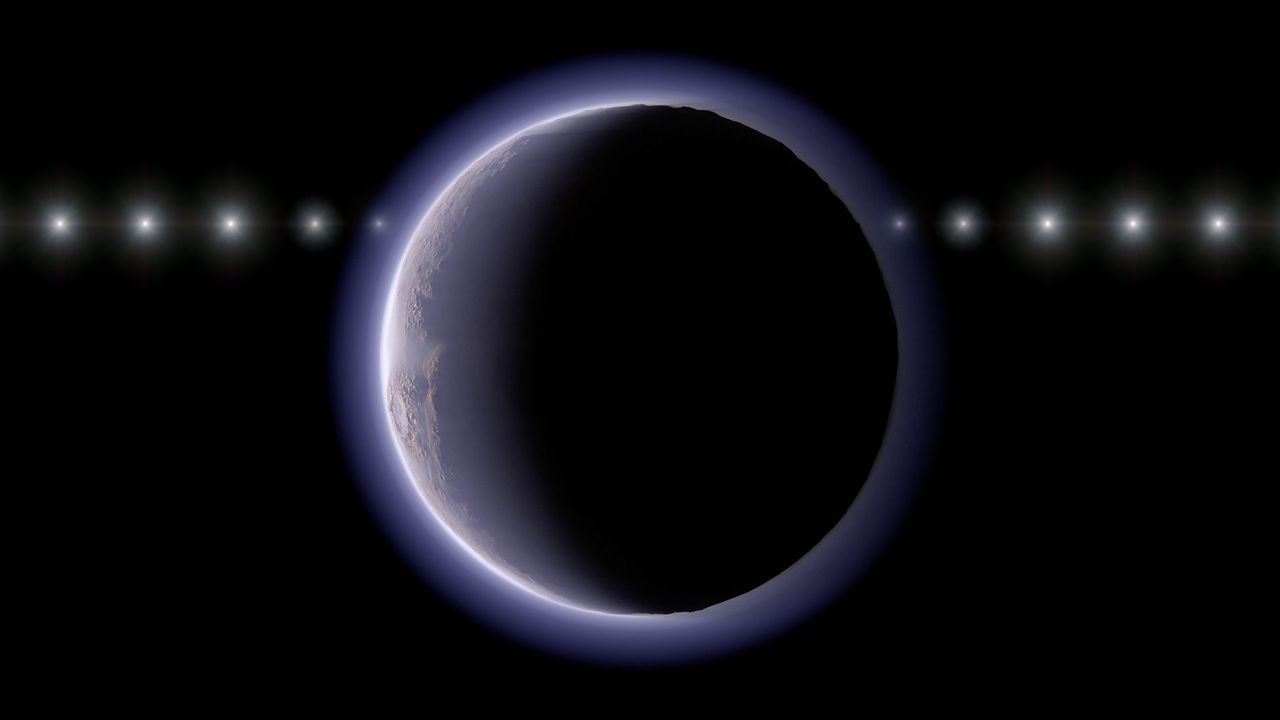
A very small body, far from the sun in an icy outer realm of the solar system, has mysteriously grown an atmosphere — and scientists are stumped as to how and why this happened. …
A very small body, far from the sun in an icy outer realm of the solar system, has mysteriously grown an atmosphere — and scientists are stumped as to how and why this happened. One possibility is that the atmosphere was produced through cryovolcanism, or basically ice volcanoes Another idea is the atmosphere could be related to an impact, but in that case, the impact must have happened relatively recently since such a thin atmosphere would leak into space and vanish within a thousand years. The object with an atmosphere, designated (612533) 2002 XV 93, is a trans-Neptunian object, or TNO, meaning it exists in the Kuiper Belt beyond the orbit of the outermost planet, Neptune . More specifically, it is a "plutino," meaning that, like Pluto , it is in a 2:3 orbital resonance with Neptune. This means it orbits the sun twice for every three orbits that Neptune makes. Furthermore, (612533) 2002 XV 93 is significantly smaller than Pluto, being about 310 miles (500 kilometers) across compared to Pluto's diameter of 1,477 miles (2,377 kilometers). Pluto is massive enough to retain a thin atmosphere, known as an exosphere, when it is near perihelion (the closest point in its elliptical orbit to the sun). It also retains some ices, such as molecular nitrogen, methane and carbon monoxide, that can sublimate into gases. As Pluto begins to move away from the sun over the course of its 248-year-long orbit, those gases gradually freeze out again back onto the surface. …
Original source: Space.com