Our Milky Way's 'Zone of Avoidance' holds a galaxy supercluster with 30,000 trillion times the sun's mass
Space.com ·
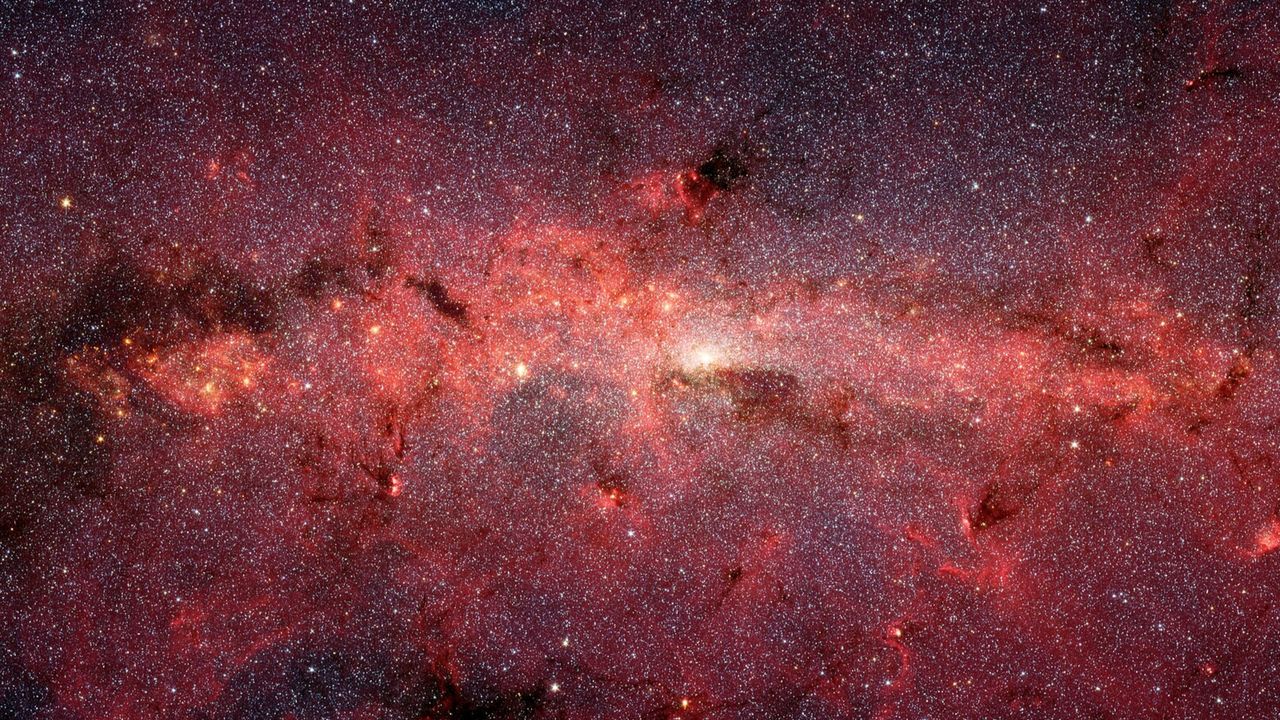
An enormous supercluster made up from over 20 individual galaxy clusters hiding behind our dusty Milky Way is even larger than astronomers had thought, affecting the motion through space of all the …
An enormous supercluster made up from over 20 individual galaxy clusters hiding behind our dusty Milky Way is even larger than astronomers had thought, affecting the motion through space of all the galaxies and galaxy clusters in our corner of the cosmos. The Vela Supercluster was discovered in 2016 thanks to a team led by Renée C. Kraan-Korteweg of the University of Cape Town in South Africa. Some 870 million light-years away, it lurks close to the plane of the Milky Way . Extragalactic astronomers refer to a region behind our Milky Way as the 'Zone of Avoidance' because dust between our galaxy's stars blots out, or deeply reddens, light from more distant galaxies behind it. Given that this Zone of Avoidance takes up about 20% of the entire sky from our vantage point on Earth, that's a lot of celestial real estate inaccessible to us. Fortunately, astronomers have their ways and means of bypassing the Zone of Avoidance, and now, Kraan-Korteweg and her team have done just that to discover the true scale of the vast Vela Supercluster. Gravity from huge superclusters tugs on the motions of galaxies across the universe, drawing them closer. We see these subtle galaxy motions as 'cosmic flows', like tides and eddies that carry galaxies this way and that. However, while we knew the Vela Supercluster was exceptionally massive when it was discovered, it didn't seem massive enough to account for all the cosmic flows seen by astronomers. …
Original source: Space.com