For NASA’s TESS, Stellar Eclipses Shed Light on Possible New Worlds
NASA Breaking News ·
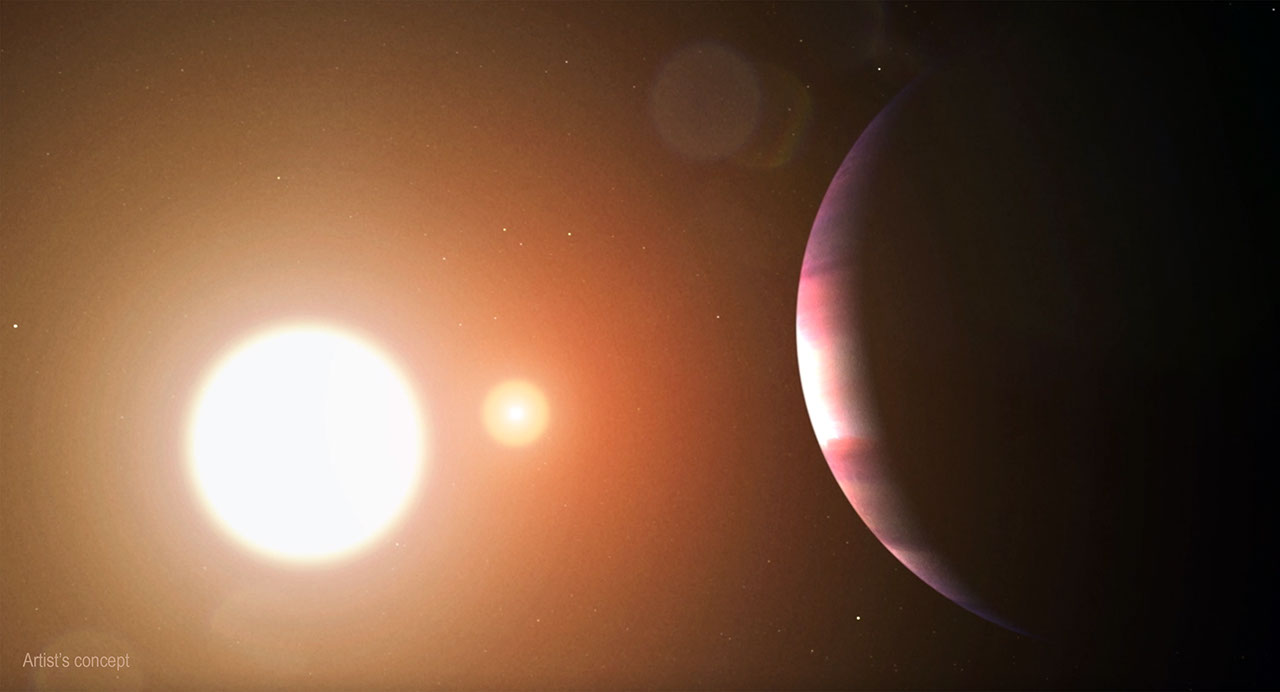
A study of NASA’s TESS (Transiting Exoplanet Survey Satellite) data on stellar pairs undergoing mutual eclipses has uncovered more than two dozen candidate exoplanets, or worlds beyond our solar …
A study of NASA’s TESS (Transiting Exoplanet Survey Satellite) data on stellar pairs undergoing mutual eclipses has uncovered more than two dozen candidate exoplanets, or worlds beyond our solar system. This method allows the mission to locate planets it couldn’t otherwise detect. To date, TESS has discovered 885 confirmed exoplanets and identified more than 7,900 candidates, nearly all found because the planets pass in front of their stars from our perspective. These events, called transits, produce a small, regular dip in the brightness of the planet’s host star. TESS also observes tens of thousands of eclipsing binary stars — two orbiting stars that alternately eclipse each other from our vantage point. Astronomers can detect the gravitational tug of exoplanets in these systems by carefully measuring the exact timing of many eclipses. Prior to the new study, discoveries by NASA’s retired Kepler mission and other facilities had recorded 16 transiting worlds around binary stars , while TESS had found an additional two. “Identifying transits in binary systems clearly is challenging, but we’d like to know more about the range of planets that can form around two gravitationally bound stars,” said study lead Margo Thornton, a doctoral candidate at UNSW ( University of New South Wales ) in Sydney. …
Original source: NASA Breaking News
Mentioned
Stellar · Maryland · Jupiter · Greenbelt · Goddard Space Flight Center · University of New South Wales