Powerful tools are revealing the ‘control knobs’ of the genome
Nature News ·
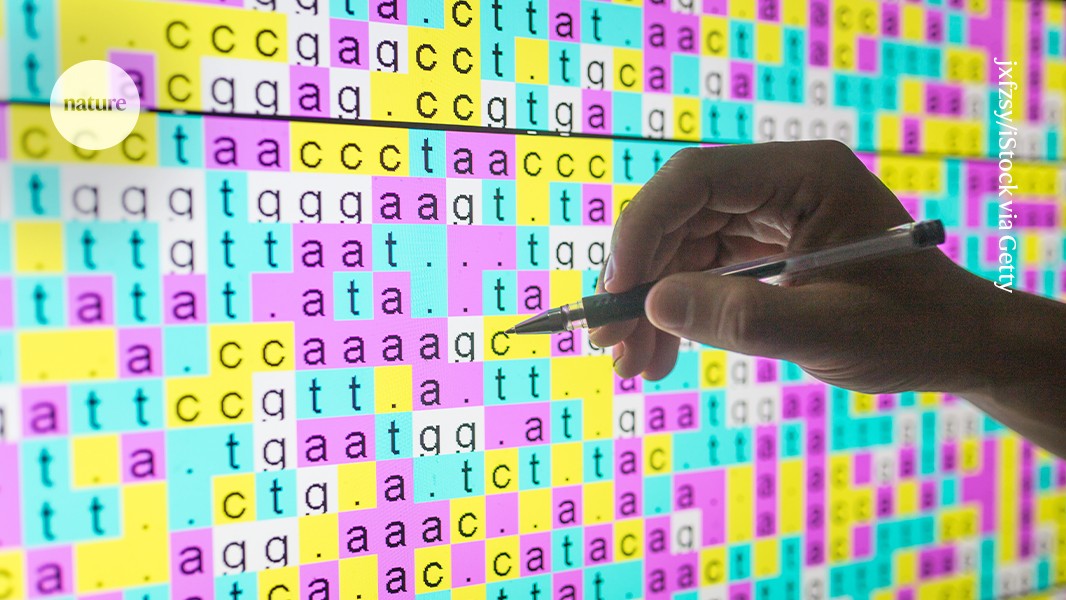
For all that scientists talk of ‘decoding the genome’, the messy reality is that the genome isn’t even written in a single language. …
For all that scientists talk of ‘decoding the genome’, the messy reality is that the genome isn’t even written in a single language. Scientists are fluent in the three-nucleotide codons that make up the protein-coding genes in DNA, but these represent only about 2% of the genomic text. The remainder is written in an entirely distinct language, which researchers are yet to untangle. “Whenever we sequence a human individual, we get about 3.5 million variants, and only 0.6% of those will be in coding regions,” says Nadav Ahituv, a geneticist at the University of California, San Francisco. That fraction is relatively easy to interpret, Ahituv says, but for the rest, “we really don’t understand what it’s doing — we don’t have a regulatory code”. AI can write genomes — how long until it creates synthetic life? But researchers are making progress on decoding the regulatory region of the genome, and learning the underlying grammar of the elements that govern when and where genes are turned on and off. To do so, they have turned to a suite of methods known as massively parallel reporter assays (MPRAs). These tools measure how millions of isolated genetic elements or sequence variants influence the expression of a hand-picked ‘reporter’ gene. That helps researchers to identify the genome’s control knobs and untangle their function without being overwhelmed by all the other parts of the genome. …
Original source: Nature News
Mentioned
Washington University · DeepMind · San Francisco · Maine · Seattle · University of California,