Why do some stars become 'supernova impostors'? Astronomers still don't quite know
Space.com ·
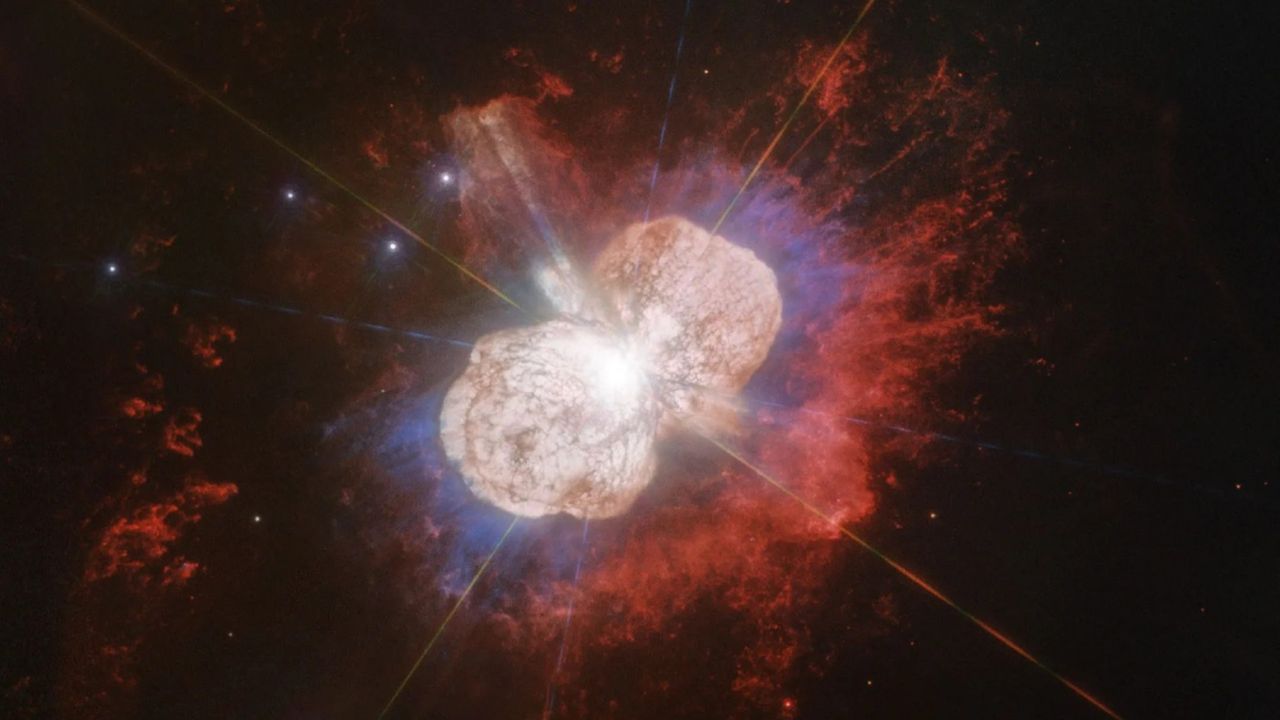
Staring up at the night sky, you might envision a star flaring up, burning thousands of times brighter than usual. That's a cosmic explosion — a supernova! Except it isn't. The star lives on. …
Staring up at the night sky, you might envision a star flaring up, burning thousands of times brighter than usual. That's a cosmic explosion — a supernova! Except it isn't. The star lives on. These violent, non-fatal eruptions can make a star mimic a true supernova — leading to what we affectionately call "supernova impostors." These are massive stars , prone to titanic temper tantrums, blasting out huge amounts of their own material. Astronomers call this "eruptive mass loss," and it's a stellar drama we're still trying to fully grasp. Trying to understand these supernova impostors is like trying to weigh a raging volcano's output without getting too close. We know it's important, but measuring how much material these stars eject, and what makes them do it, is surprisingly hard. Current ways of measuring mass loss from, say, infrared or radio observations, typically only show us what's happening right now. But these stars spit stuff out in fits and starts, not a steady stream. And when we try to average it all out across stellar populations, we lose the juicy details of individual star behavior. For decades, astronomers have concocted intricate computer models to predict how stars live and die . These stellar evolution tracks are our cosmic crystal balls. But for truly gargantuan stars, the models often sputter out, unable to complete their lives in the simulation. One big sticking point? This very same eruptive mass loss. …
Original source: Space.com